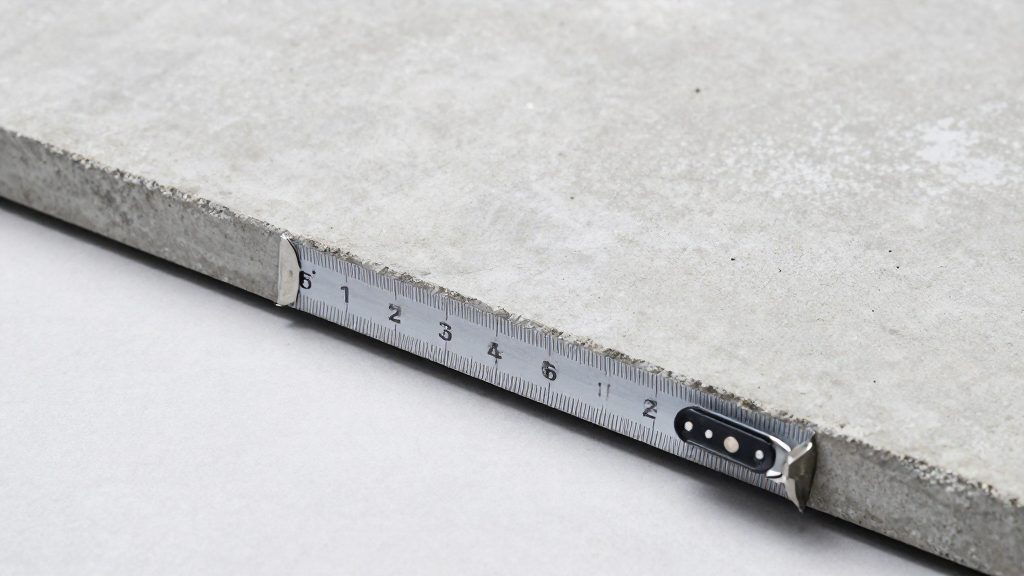
How to Calculate Concrete Volume from Square Footage
To determine the exact amount of concrete needed for a slab, convert a two-dimensional area into a three-dimensional volume. The standard method relies on the relationship between square footage, thickness, and cubic yards. The core formula is: Cubic Yards = (Square Footage × (Thickness in inches / 12)) / 27. This works because one cubic yard equals 27 cubic feet.
First, ensure unit consistency. Since the result is in cubic yards, convert slab thickness from inches to feet by dividing by 12. For example, a 4-inch slab becomes 4/12 feet. This conversion is essential because the formula multiplies area in square feet by depth in feet to yield cubic feet, which are then divided by 27.
Plug your square footage and converted thickness into the formula to get the theoretical volume. In practice, add a small margin for waste to account for uneven ground, spillage, or formwork variations. This ensures your order matches physical requirements without guesswork.
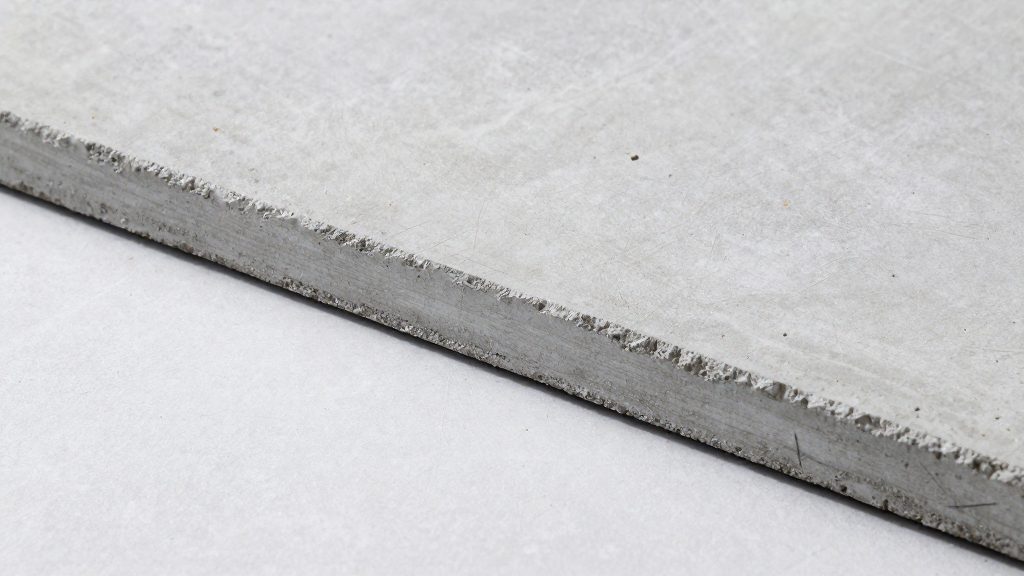
Standard Slab Thickness by Project Type
Slab depth is determined primarily by the load it must support. For residential projects, thickness dictates structural integrity and longevity. Selecting the appropriate slab thickness ensures the concrete withstands specific weights without cracking.
For light-duty applications such as patios, sidewalks, and standard shed floors, a depth of 4 inches is standard. This provides sufficient strength for foot traffic and light furniture while keeping material costs manageable. It is the most common choice for decorative outdoor spaces where heavy vehicles are not expected.
When the slab needs to support vehicles, such as for driveways, the required depth increases. A thickness ranging from 5 to 6 inches is generally advised. This additional depth helps distribute the weight of cars and trucks, reducing the risk of structural failure under repeated loading.
For areas intended to hold heavy equipment or industrial machinery, even greater thickness is required. These heavy equipment pads often exceed standard residential depths to handle significant static and dynamic loads. Always consult local building codes, as they may mandate specific minimums based on soil conditions and intended use.
| Project Type | Recommended Thickness |
|---|---|
| Patios, Sidewalks, Shed Floors | 4 inches |
| Driveways | 5 to 6 inches |
| Heavy Equipment Pads | Greater than 6 inches |
Cubic Yard Coverage Rates for Common Depths
Estimating how much area a single cubic yard of concrete covers depends entirely on the thickness of your slab. Since one cubic yard equals 27 cubic feet, surface area covered changes as depth increases. Using simple shortcut divisors allows you to quickly estimate the number of bags or truckloads needed without complex calculations.
For most residential projects, such as sidewalks, patios, and standard shed floors, a 4-inch thickness is typical. At this depth, one cubic yard covers approximately 81 square feet. You can simply divide your total square footage by 81 to get a rough estimate of cubic yards required. If your project involves heavier loads, such as driveways or pads for heavy equipment, a thickness of 5 to 6 inches is standard. At 5 inches, coverage drops to about 65 square feet per cubic yard. For a 6-inch slab, coverage further reduces to approximately 54 square feet per cubic yard.
| Slab Thickness | Approx. Coverage per Cubic Yard | Shortcut Divisor |
|---|---|---|
| 4 inches | 81 square feet | Divide by 81 |
| 5 inches | 65 square feet | Divide by 65 |
| 6 inches | 54 square feet | Divide by 54 |
These figures provide a baseline for planning. However, real-world conditions often require adjustments. Uneven ground, form deflection, and spillage can consume more material than theoretical calculations suggest.
How Many Bags of Concrete Do You Need per Square Foot?
To determine the number of bags required, convert the total volume from cubic yards into individual bag counts. The number of bags needed depends entirely on the size of the bag you purchase, as different weights yield different volumes of concrete.
For most residential projects, you will choose between 80-pound and 60-pound bags. An 80-pound bag is the most common size for DIY work. Each yields approximately 0.60 cubic feet of concrete. Since one cubic yard equals 27 cubic feet, you need 45 of these 80-pound bags to fill one cubic yard. This makes the 80-pound bag the standard unit for calculating material needs.
If you prefer a lighter option, the 60-pound bag yields approximately 0.45 cubic feet. Because this bag is smaller, you need 60 of them to equal one cubic yard. While easier to carry, this requires more bags per cubic yard, which can affect your total count and handling time.
| Bag Weight | Yield per Bag (cubic feet) | Bags per Cubic Yard |
|---|---|---|
| 80 pounds | 0.60 | 45 |
| 60 pounds | 0.45 | 60 |
To find your total bag count, multiply the required cubic yards by the number of bags per cubic yard for your chosen bag size. For example, if your calculation shows you need two cubic yards of concrete, you would need 90 bags of the 80-pound variety or 120 bags of the 60-pound variety. Always round up to the nearest whole bag, as you cannot purchase partial bags.
Why You Must Add a 10% Overage Allowance
When calculating the total volume of concrete needed for a slab, the mathematical result based on area and thickness is rarely the exact amount required on site. Real-world conditions introduce variables that cause material loss, meaning you must always add a waste margin to your final figure. Industry standards recommend adding between 5% and 10% to your calculated volume to ensure you have enough material to complete the pour without interruption.
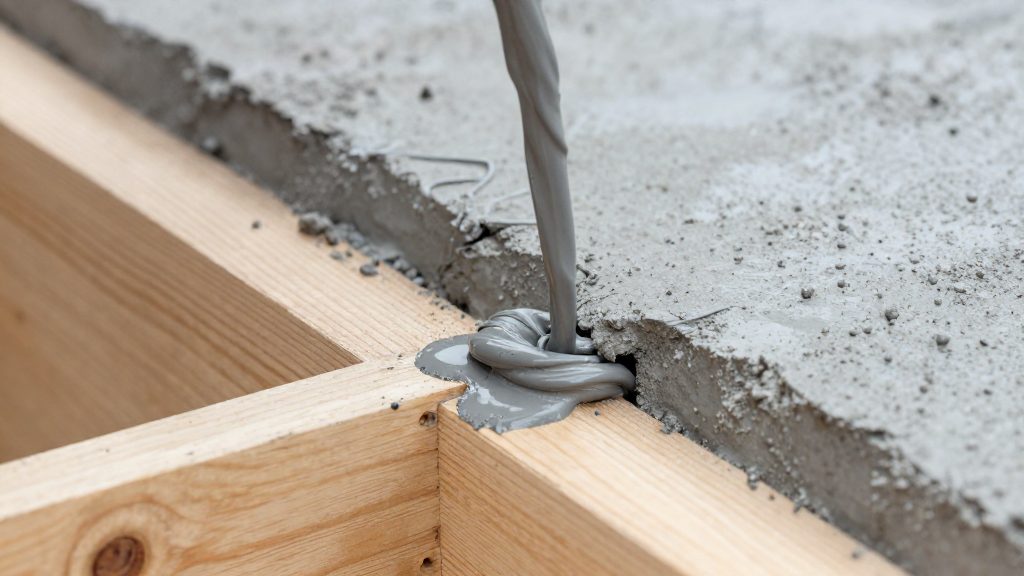
This allowance accounts for three primary factors. First, uneven grade is common in most outdoor sites. Even after careful grading, the ground is rarely perfectly level. Low spots require extra concrete to achieve a uniform thickness, while high spots may require less, but the net effect often demands more material than a flat theoretical calculation suggests. Second, form deflection occurs as the wet concrete exerts pressure on the wooden or metal forms. This pressure can cause the forms to bow outward slightly, increasing the internal volume of the mold and requiring more concrete to fill the space correctly.
Finally, spillage and cleanup represent a tangible loss of material. Concrete that splashes over the edge of the forms, drips from the pump hose, or is used to clean out the mixer and chutes cannot be reused in the slab. This material is lost during the pour and subsequent cleanup. By adding a buffer to your order, you prevent the costly and time-consuming scenario of running out of concrete before the slab is fully filled, which can compromise the structural integrity of the final product.
Worked Examples for Patios, Walkways, and Slabs
Applying the volume formula to real-world projects ensures you order the correct amount of material. The process involves determining the square footage, applying the specific thickness, and adjusting for waste.
Patio Example (4-inch Depth) Consider a patio measuring 10 feet by 10 feet. The total area is 100 square feet. Using the standard 4-inch thickness, the volume in cubic feet is calculated by multiplying the area by the thickness in feet (4/12). This results in approximately 33.3 cubic feet. To convert this to cubic yards, divide by 27. The raw requirement is roughly 1.23 cubic yards. To account for uneven ground and spillage, apply a standard overage margin. Adding 10% to the base volume brings the total to approximately 1.35 cubic yards. This ensures you have enough material to fill the forms completely without running short.
Walkway Example (5-inch Depth) For a walkway that is 4 feet wide and 20 feet long, the area is 80 square feet. A 5-inch thickness is often used for heavier foot traffic. Converting the thickness to feet (5/12) and multiplying by the area gives about 33.3 cubic feet. Dividing by 27 yields approximately 1.23 cubic yards. Including a 5% to 10% waste factor, the final order should be between 1.29 and 1.35 cubic yards. This slight increase covers minor variations in the subgrade level.
Final Bag Count Once the total cubic yards are determined, convert to bags. If using 80-pound bags, note that 45 bags equal one cubic yard. For the patio example requiring 1.35 cubic yards, multiply 1.35 by 45 to get 60.75. Always round up to the next whole number, meaning you need 61 bags. For the walkway requiring 1.35 cubic yards, the calculation is identical, resulting in 61 bags. If using 60-pound bags, multiply the cubic yards by 60. In both examples, this would require 81 bags. Always verify the bag yield on the specific product label, as densities can vary slightly.