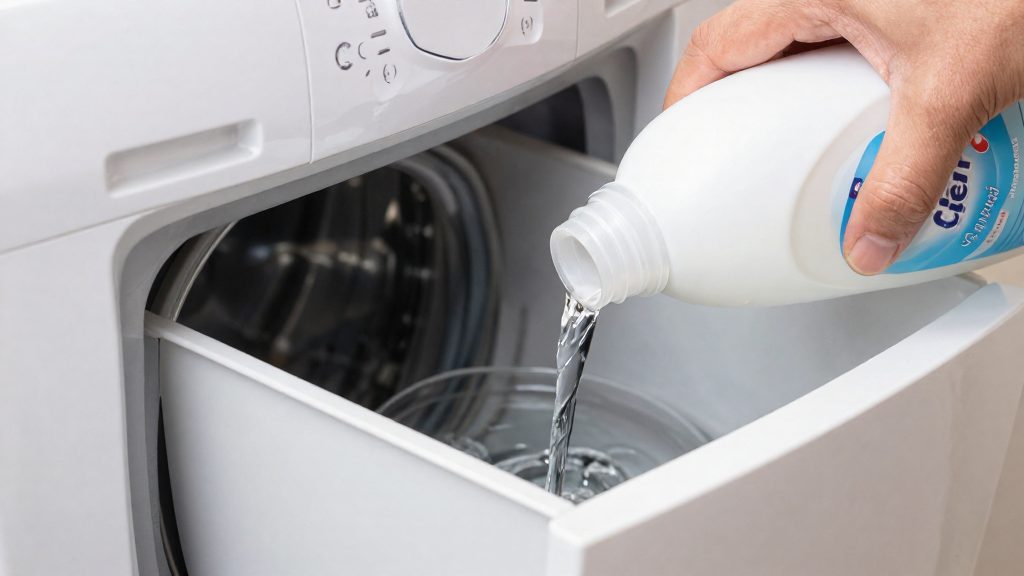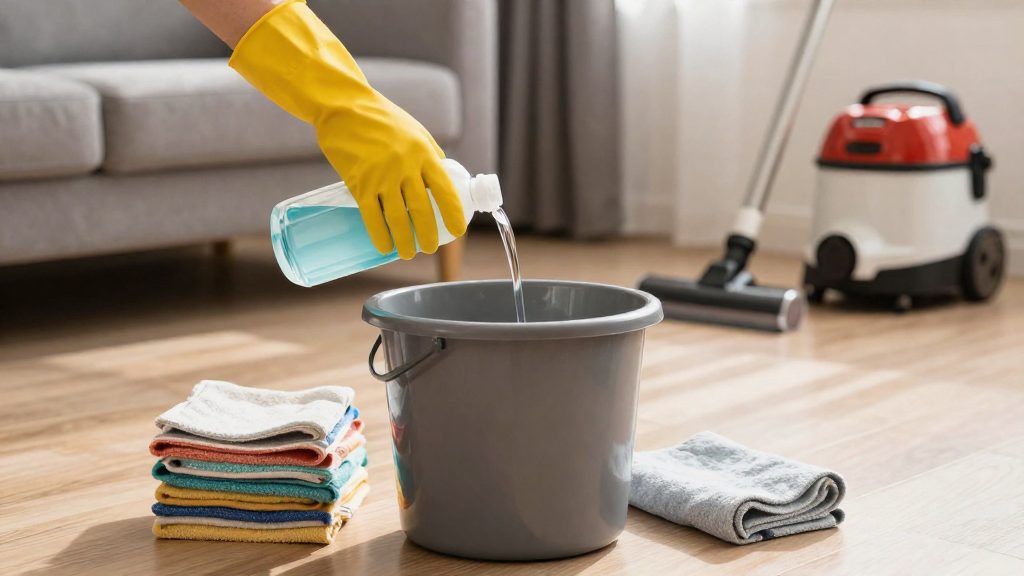
The right cleaning solution amount for carpet depends on the exact concentrate, machine, and cleaning method. For example, Reckitt specifies 2.3 US fluid ounces per gallon of hot tap water for one household machine-cleaning formula; that dose applies only to that formula. Measure for the water you actually add, and follow the equipment instructions too. Room size helps determine the total mixture needed, rather than how strong to make it. Reckitt’s formula directions
How do you choose the correct cleaning method?
Before calculating a dose, check whether your carpet can be wet-cleaned with the equipment you intend to use. Find the carpet manufacturer’s care instructions, including any requirements attached to its warranty. A cleaner’s suitability for a machine does not by itself establish suitability for your carpet.
The Carpet and Rug Institute’s care guide, revised in 2019, recommends following the carpet manufacturer’s cleaning recommendations and using cleaning agents intended for the application. It also identifies natural fibers as needing special attention: silk and plant-fiber floor coverings are best handled by carpet-cleaning professionals. Wool requires care with heat, agitation, and cleaning chemistry. Carpet and Rug Institute care guide
Next, identify where the detergent belongs. Instructions may call for a mixture in the clean-water tank, concentrate in a separate dispensing compartment, or a prespray applied before extraction. These are different procedures. Locate the directions for the procedure you will actually follow before measuring anything.
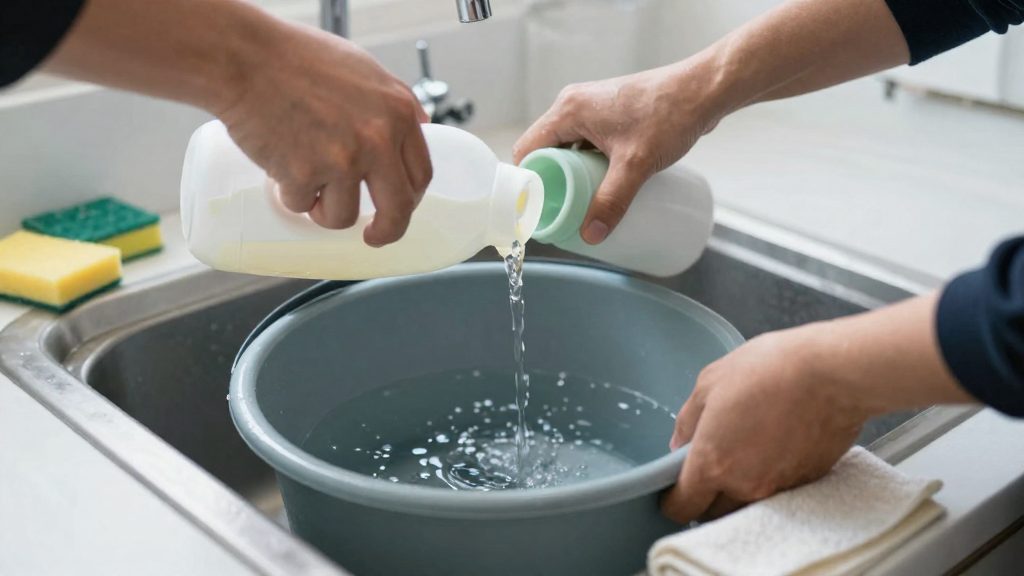
How do machine fill lines affect the amount?
Check the user guide for your exact model and selected cleaning mode. A tank can have different water lines for different modes, with a corresponding formula amount for each. The manufacturer’s US filling instructions for certain upright machines, for example, distinguish lower-line express cleaning from upper-line deep cleaning. Manufacturer’s US filling instructions
Read what each mark represents: water, formula, or completed mixture. Do not assume a printed capacity is the amount of water used for every setting. Likewise, the dirty-water recovery tank is not a measuring guide for the fresh cleaning batch.
If your machine meters concentrate from a separate compartment, use its filling and dispensing directions. A hand-mixing calculation belongs to a procedure that actually calls for premixing. If the bottle directions and equipment guide appear incompatible, contact the manufacturer before filling the machine; choosing a compromise concentration is not a reliable way to resolve the conflict.
How do you calculate concentrate for a partial tank?
When the label gives a dose per gallon of water and permits the batch size you need, use this calculation:
Concentrate needed = labeled concentrate dose per gallon × actual gallons of water
Keep the concentrate unit unchanged throughout the calculation. A dose expressed in fluid ounces produces an answer in fluid ounces; a dose expressed in teaspoons produces an answer in teaspoons.
Using the household formula identified in the opening paragraph, proportional calculations give the following amounts. These are calculated examples from Reckitt’s directions, not doses for other concentrates:
| Actual water volume | Calculated concentrate amount |
|---|---|
| 0.25 US gallon | 0.575 US fl oz |
| 0.5 US gallon | 1.15 US fl oz |
| 2 US gallons | 4.6 US fl oz |
The larger example represents a batch calculation, not permission to exceed a machine’s tank capacity. For the smallest amount, use measuring equipment with sufficiently fine markings rather than estimating between broad lines. Reckitt’s dilution instructions
For a label stated per gallon but a water measurement in fluid ounces, convert the water volume first:
Water in US gallons = water in US fluid ounces ÷ 128
The US Geological Survey lists 128 fluid ounces per US gallon. Use US liquid-volume measurements consistently. US Geological Survey, 2026
What is the difference between water volume and finished solution?
Read the wording around the dilution carefully. “Add concentrate to a gallon of water” and “add water to make a gallon of solution” describe different measurements.
In the first instruction, the gallon refers to water before the concentrate is added. In the second, it refers to the completed mixture, including the concentrate. Substituting one interpretation for the other changes the concentration.
For a finished-volume instruction, follow the stated mixing sequence and bring the completed mixture to the specified volume. For a water-based instruction, measure the specified water amount and add the required concentrate as directed. In either case, respect the container’s fill limit.
If a label uses a ratio without explaining whether it means concentrate to water or concentrate to finished solution, request clarification. Use explicit measured quantities when the manufacturer supplies them, rather than replacing those quantities with your own interpretation of a ratio.
How much solution should you prepare for a room?
Start with the carpet area you intend to clean. For a rectangular section:
Carpet area = length in feet × width in feet
For an irregular room, divide the accessible carpet into rectangles, calculate their areas, and add them. Measure the actual cleaning area so your estimate reflects the work planned.
When the manufacturer gives an applicable coverage rate, calculate:
Finished solution needed = carpet area ÷ coverage per gallon of finished solution
Keep the units consistent: square feet divided by square feet per gallon gives gallons. Check that the coverage statement applies to your formula, dilution, equipment, and application method. Prespray coverage describes an application step and should not be treated as extraction-machine coverage.
If your household instructions provide no applicable area rate, prepare a permitted batch and record the area it cleans while following the specified technique. That observation can guide later refills under similar conditions. Do not stretch a tank across more carpet by changing the required application technique.
To plan the concentrate quantity, total the measured doses for the batches you expect to prepare. If you use different approved fill levels, calculate each separately before adding them. Keep any water-only extraction or rinse stage separate from detergent-batch calculations. This gives you a useful quantity to have available without treating every gallon used during cleaning as a gallon that needs concentrate.
When can you increase the concentration for heavy soil?
Increase concentration only when the exact formula’s directions provide a stronger dilution for that condition. A heavily used hallway does not establish its own detergent dose.
For example, Sunshine Makers, Inc. specifies separate light-, medium-, and heavy-soil dilutions for a carpet prespray. Its procedure calls for moistening the fibers with that mixture, then using water in the extraction machine’s reservoir. That stronger prespray belongs to the stated method; it is not an instruction to add the same amount to an extraction tank. Sunshine Makers, Inc. application directions
Treat a stubborn spot according to its specific removal instructions. The Carpet and Rug Institute warns that spot-cleaning residues can attract soil and advises against exceeding recommended concentrations. Pouring extra detergent onto a persistent mark can leave another substance that must be removed. Carpet and Rug Institute residue precautions
How should you measure and prepare the batch?
Set out a dedicated liquid measure that can accurately read the calculated amount. Use fluid-volume markings for liquid concentrate, rather than ounces on a kitchen scale. A bottle cap is useful only when the manufacturer identifies its capacity or provides a dose line.
Before cleaning the main area, test the intended solution on a hidden section for colorfastness, following the product’s test directions. Reckitt requires this check for the household formula used in the calculation examples. Vacuum thoroughly to remove loose dirt before wet cleaning. Reckitt’s preparation instructions
Measure the water, measure the concentrate, and combine them in the specified order. Check the final fill level before replacing the tank cap. If you lose track while measuring, prepare a correctly measured batch rather than guessing how much concentrate is already present. Keep the bottle nearby so you can verify the directions at each refill.
How do you remove excess water and return the carpet to use?
Follow the machine’s extraction procedure, including its instructions for passes without spraying. In the prespray procedure described by Sunshine Makers, Inc., water droplets left on the hand after touching the carpet indicate that further suction-only extraction is needed. The manufacturer recommends fans and open windows for drying, and waiting until the carpet is dry before walking on it. Sunshine Makers, Inc. extraction and drying directions
If the carpet remains unusually wet or develops an odor, stop adding liquid and seek advice from the carpet manufacturer or a qualified carpet-cleaning professional. The Carpet and Rug Institute explains that overwetting can contribute to sour odors and fungal growth. Carpet and Rug Institute’s explanation of extraction cleaning
Keep chemical safety separate from dilution arithmetic. Do not add bleach or disinfectant to a cleaning mixture. CDC guidance dated April 24, 2024, warns that mixing bleach or disinfectants with other cleaners can release dangerous vapors. Follow the formula’s handling precautions and any requirements for protective equipment. CDC cleaning safety guidance
Frequently asked questions
Can I save leftover diluted carpet-cleaning solution?
Check the formula’s storage and reuse directions. If they do not address diluted solution, ask the manufacturer before storing it for another cleaning session.
What should I do if the dilution label is unreadable?
Use the container’s product identifier to request the correct directions from the manufacturer. Do not estimate the dose from the cleaner’s appearance or smell.
Can I use the same carpet-cleaning mixture on upholstery?
Only when the furniture care instructions, cleaning formula, and machine directions authorize that use. Carpet-cleaning directions alone do not establish upholstery compatibility.