How Much Mulch Depth Does a Garden Bed Need?
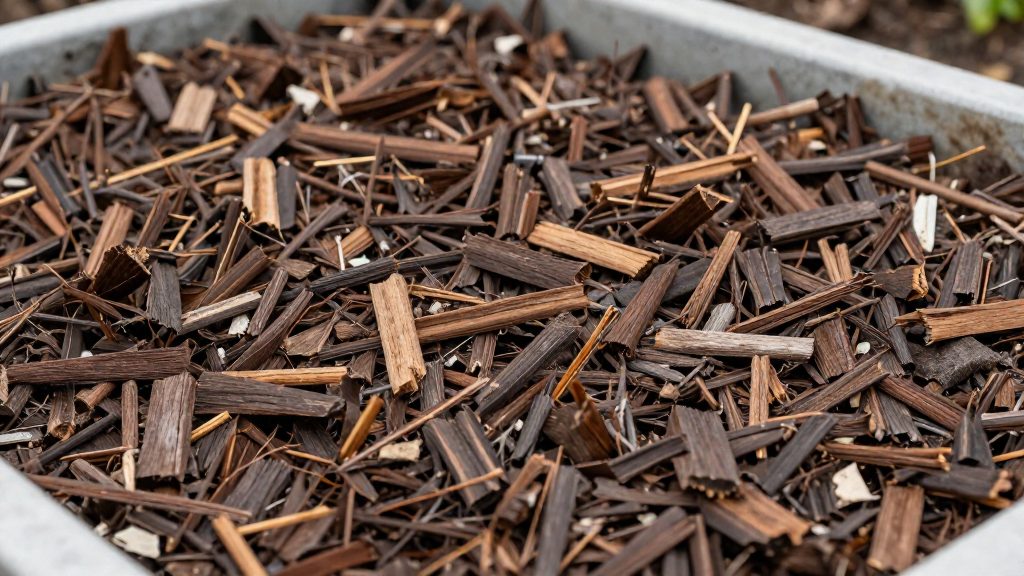
The ideal thickness of your mulch layer depends on the material’s texture and plant needs. For most established beds, a standard depth of 2 to 3 inches offers the best balance between weed suppression and soil health. This range blocks sunlight for weeds while allowing air and water to reach the root zone.
Adjust this baseline based on mulch type. Fine mulches, like double-shredded hardwood, break down and compact faster; use a thinner layer of 1 to 2 inches to maintain aeration. Coarse mulches, such as large bark nuggets, are stable and resist compaction, allowing depths of 3 to 4 inches.
Do not exceed 4 inches, as thicker layers restrict oxygen and water penetration, potentially harming roots. Always maintain a 2 to 3-inch clearance around plant crowns and tree trunks. Piling mulch against woody stems traps moisture, encouraging rot and pests.
| Mulch Texture | Recommended Depth | Primary Benefit |
|---|---|---|
| Fine (e.g., shredded hardwood) | 1 to 2 inches | Prevents compaction and maintains aeration |
| Standard (e.g., wood chips) | 2 to 3 inches | Optimal weed suppression and moisture retention |
| Coarse (e.g., bark nuggets) | 3 to 4 inches | Long-lasting coverage and structural stability |
How to Calculate Garden Bed Area and Square Footage
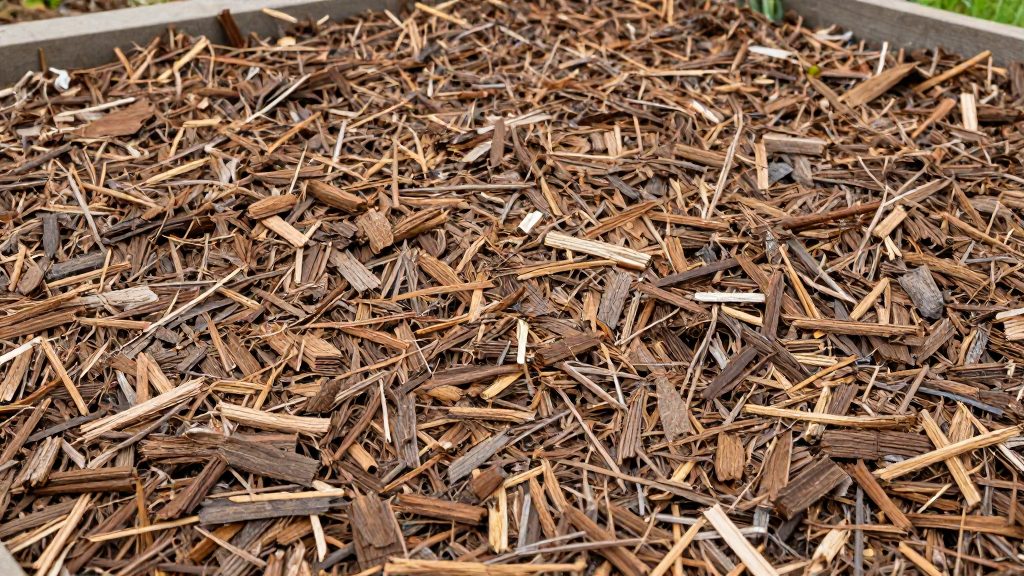
Accurate mulch calculation begins with measuring the surface area of your garden bed. The method depends on the shape of the space.
Rectangular and Square Beds Measure the length and width in feet. Multiply these dimensions to find the area in square feet. For non-rectangular beds, divide the space into smaller rectangular sections, calculate each area, and sum them.
Circular Beds For circular areas, measure the radius (distance from center to edge). Square the radius and multiply by pi (approximately 3.14) to determine the area in square feet.
Irregular Shapes Break irregular beds into simpler geometric components, such as rectangles and triangles. Calculate the area of each shape and sum the results to minimize errors.
The Formula to Convert Square Footage to Cubic Yards
To find the required volume, translate surface area and depth into cubic yards. First, calculate the total square footage (length × width for rectangles; radius² × pi for circles). Multiply this area by your chosen depth in inches.
Since one cubic yard equals 27 cubic feet, a simplified formula divides the product of square feet and depth in inches by 324. This yields the total cubic yards. For example, a 100-square-foot bed at a 3-inch depth requires: (100 × 3) / 324 ≈ 0.93 cubic yards.
This single-step calculation avoids separate unit conversions. Note that this provides theoretical volume; account for settling or irregular contours in practice.
How Many Bags of Mulch Are in a Cubic Yard?
Convert cubic yards into retail bags for purchase. In the US, the standard bag size is 2.0 cubic feet, though 1.5 and 3.0 cubic foot bags exist. Check the label before calculating.
One cubic yard equals 27 cubic feet. For 2.0-cubic-foot bags, you need approximately 13.5 bags per cubic yard. For 3.0-cubic-foot bags, the count is 9 bags per cubic yard. Always round up to the nearest whole number to avoid gaps.
| Bag Size (Cubic Feet) | Bags per Cubic Yard |
|---|---|
| 2.0 | 14 |
| 3.0 | 9 |
Multiply your total cubic yards by the bags-per-yard figure. Add a small contingency allowance to account for irregular shapes, uneven ground, and natural settling.
Worked Examples for Common Bed Sizes
Apply the standard calculation to specific dimensions: measure the bed, select a depth, and convert to purchasable units.
Small Bed Example A 4 ft × 6 ft bed has an area of 24 square feet. At a depth of 2 inches (suitable for fine mulches), the volume is (24 × 2) / 324 ≈ 0.15 cubic yards. This requires roughly two 2.0-cubic-foot bags, ideal for containers or narrow borders.
Medium Bed Example An 8 ft × 10 ft bed has an area of 80 square feet. At a standard depth of 3 inches, the volume is (80 × 3) / 324 ≈ 0.74 cubic yards. This translates to about ten 2.0-cubic-foot bags, common for vegetable patches or flower beds.
Large Bed Example A 12 ft × 20 ft bed has an area of 240 square feet. At 3 inches depth, the volume is (240 × 3) / 324 ≈ 2.22 cubic yards. This equates to roughly thirty 2.0-cubic-foot bags. For large areas, buying by the cubic yard is often more practical.
What Are the Consequences of Over-Mulching?
Applying mulch thicker than the recommended maximum harms plant health. Exceeding safe depth creates physical barriers that interfere with natural soil processes.
The primary issue is soil oxygen restriction. Roots require air to respire. A thick, compacted layer blocks gas exchange, suffocating the root zone. This lack of oxygen stresses plants, leading to stunted growth or root death.
Another problem is water penetration blockage. Deep mulch can become waterlogged, acting like a sponge that holds moisture on the surface rather than allowing it to percolate down. This creates a paradox where the soil beneath remains dry while the mulch stays saturated, making consistent water access difficult for plants.
Finally, maintaining clearance around plant crowns prevents plant crown rot. Piling mulch against stems traps moisture against the bark and growing points. This dampness encourages fungal diseases and rot, which can girdle and kill the plant. It also attracts pests that thrive in moist, dark environments. Ensure the mulch layer is pulled back from the base of each plant to keep stems dry and exposed to air circulation.
Frequently asked questions
What is the ideal depth for mulching a garden bed?
For most established beds, a standard depth of 2 to 3 inches provides the best balance between weed suppression and soil health. You should adjust this based on texture, using 1 to 2 inches for fine mulches and 3 to 4 inches for coarse materials like bark nuggets.
How do I calculate the total volume of mulch needed?
First, determine the square footage of your bed by multiplying length by width for rectangles or using the radius for circles. Then, apply the shortcut formula: multiply the square footage by the desired depth in inches and divide by 324 to get the required cubic yards.
Should I add extra mulch for settling or irregular shapes?
Yes, it is practical to add a contingency allowance of 5% to 10% to your calculated volume. This extra amount accounts for natural compaction, settling over time, and uneven contours that standard formulas might not fully capture.