Minimum and optimal topsoil depth for vegetables
The depth of your topsoil layer directly impacts root development and nutrient access. For most standard garden vegetables, a minimum depth of 8 inches is the baseline requirement for successful planting. This threshold ensures roots have sufficient room to establish themselves and access moisture and nutrients without becoming restricted by underlying compacted layers.
While 8 inches allows for basic growth, the optimal standard depth for a healthy, productive garden is generally considered to be 10 to 12 inches. This additional volume provides better insulation, improved water retention, and more space for root systems to expand, leading to stronger plants and higher yields. If starting with existing soil, loosen the top layer before adding new topsoil to ensure good integration and prevent compaction.
For specific planting scenarios, adjust your depth based on the root structure of your chosen plants. Shallow-rooted vegetables, such as lettuce, spinach, radishes, and green onions, can thrive in a thinner layer. For these crops, a depth of 6 to 8 inches is sufficient, making them ideal for smaller containers or areas where adding significant soil volume is difficult.
| Root Type | Example Crops | Recommended Depth |
|---|---|---|
| Shallow-rooted | Lettuce, spinach, radishes | 6 to 8 inches |
| General Vegetables | Most standard garden crops | 8 to 12 inches |
How deep do roots grow for common vegetables?
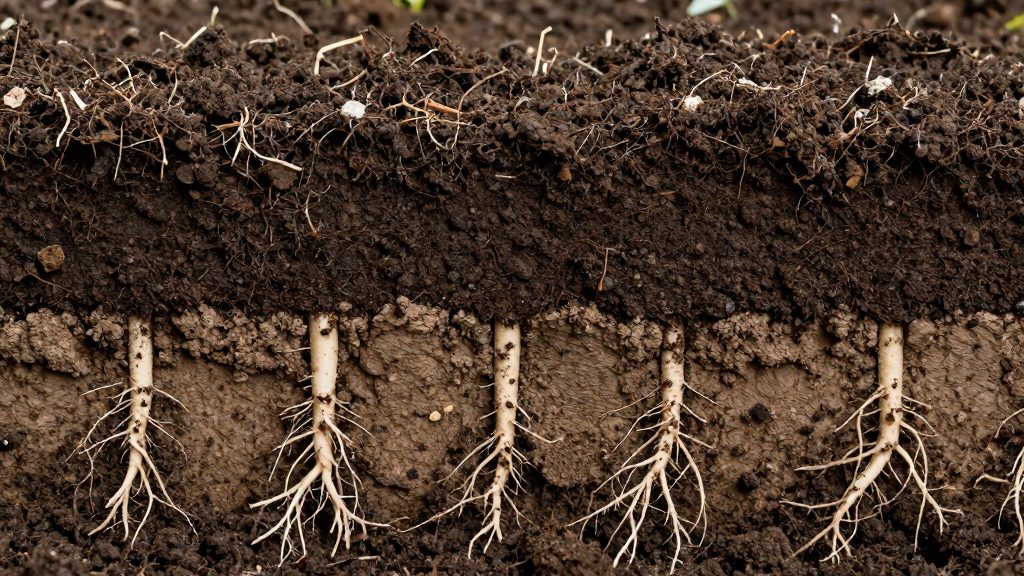
Root systems vary significantly by crop type, dictating the necessary soil depth for healthy growth. Understanding these differences helps you plan your garden layout effectively.
Shallow-rooted crops like lettuce, spinach, radishes, and green onions have compact root structures. These plants typically require a minimum soil depth of 6 to 8 inches to thrive. Because their roots stay near the surface, they are more sensitive to drying out and benefit from consistent moisture in the upper layer of the soil.
Deep-rooted crops such as tomatoes, winter squash, pumpkins, long carrots, and parsnips develop extensive root systems that penetrate much further into the ground. To support their growth, these vegetables need a minimum depth of 12 to 18 inches. Deeper roots allow these plants to access water and nutrients from a larger soil volume, making them more resilient during dry periods.
| Vegetable Category | Examples | Minimum Root Depth |
|---|---|---|
| Shallow-rooted | Lettuce, Spinach, Radishes, Green Onions | 6 to 8 inches |
| Deep-rooted | Tomatoes, Winter Squash, Pumpkins, Long Carrots, Parsnips | 12 to 18 inches |
When planning your garden, consider grouping plants with similar root depths together. This simplifies soil preparation and watering routines. For instance, a bed dedicated to leafy greens can be shallower than one intended for root vegetables or fruiting plants.
By matching your soil depth to the specific needs of each vegetable, you create an environment where roots can expand freely, supporting stronger plant health and better yields throughout the growing season.
Topsoil depth requirements: in-ground vs. raised beds
The structure of your growing space dictates how much soil you need. The primary distinction lies in whether you are amending existing ground or building a contained bed from scratch.
In-ground gardens rely on the native soil profile. Before adding new topsoil, you must loosen the existing subsoil. The standard practice is to till or break up the ground to a depth of 6 to 10 inches. This loosening step is essential to prevent a hardpan layer from blocking root penetration. Once the native soil is aerated, you can add or amend the top layer. For most standard vegetables, the total depth of workable soil should reach 8 to 12 inches. This ensures that even crops with moderate root systems have sufficient room to establish without hitting compacted layers.
Raised beds operate differently because they are self-contained. The required depth depends entirely on what lies beneath the bed frame. If the bed sits directly on native soil, a depth of 8 to 12 inches is sufficient. The underlying earth provides drainage and additional root space. However, if the bed is placed over an impermeable barrier like concrete, asphalt, or hard-packed subsoil, the soil must be deeper to support the entire root system. In these cases, you need 12 to 18 inches of soil. This extra volume compensates for the lack of drainage and root extension into the ground below.
| Bed Type | Underlying Surface | Recommended Soil Depth |
|---|---|---|
| In-ground | Native soil (tilled) | 8 to 12 inches total |
| Raised Bed | Native soil | 8 to 12 inches |
| Raised Bed | Impermeable barrier | 12 to 18 inches |
How much topsoil do you need for a garden bed?
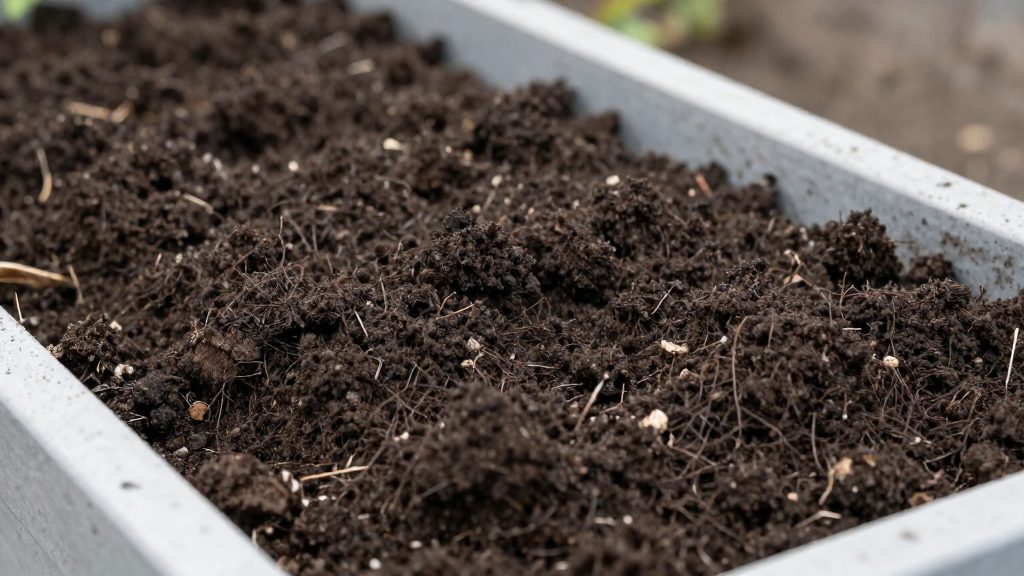
When constructing a raised bed, the total volume of soil required depends on the dimensions of the structure and the desired depth. However, the quality of the growing medium is determined by the specific blend of materials used. For optimal vegetable growth, the industry standard for a blended raised bed composition involves mixing two primary components in specific proportions.
The recommended ratio is 50 to 60 percent topsoil combined with 40 to 50 percent compost or decomposed organic matter. This specific mixture ensures that the bed has sufficient structure and drainage from the topsoil, while the compost provides the necessary nutrients and moisture retention. Using only topsoil can lead to compaction over time, whereas using only compost may result in a medium that is too light and drains too quickly for many root vegetables.
To prepare this mixture, combine the materials thoroughly before filling the bed. This ensures an even distribution of nutrients and prevents pockets of dense soil or excessive organic matter. The resulting blend creates a loose, friable texture that is ideal for root expansion and water infiltration.
This standard ratio applies regardless of the specific vegetables you plan to grow, whether they are shallow-rooted greens or deep-rooted crops. Maintaining this balance helps sustain soil health over multiple growing seasons, as the organic component breaks down and needs to be replenished annually, while the topsoil base remains relatively stable.
Calculating topsoil volume and settling allowance
To determine how much soil you need, start with the basic geometric formula. Multiply the length and width of your garden bed in feet, then multiply that area by the desired depth. Since depth is often measured in inches, convert it to feet by dividing by 12. The result gives you the raw volume in cubic feet. For larger projects, you can convert this figure to cubic yards by dividing the cubic feet total by 27. This standard conversion helps when ordering bulk materials, as suppliers typically sell by the cubic yard.
However, raw volume calculations often underestimate the final requirement. Soil is not a solid block; it contains air pockets and organic matter that compress over time. When you water the bed, the material settles and compacts. To account for this natural settling allowance, increase your calculated volume by a standard margin. This ensures that after the soil has settled, the bed remains at the intended depth without needing immediate refilling. Without this adjustment, you may find the soil level drops below the optimal depth for root development shortly after installation.
| Calculation Step | Method |
|---|---|
| Raw Volume (cubic feet) | Length (ft) × Width (ft) × [Depth (in) ÷ 12] |
| Conversion to Cubic Yards | Raw Volume (cubic feet) ÷ 27 |
| Adjusted Volume | Raw Volume + Settling Allowance |
Worked examples for standard garden beds
The following examples demonstrate how to calculate the specific volume of topsoil required for common garden bed configurations. These calculations apply the standard formula: Volume (cubic feet) = Length (ft) × Width (ft) × [Depth (in) ÷ 12]. To convert the result to cubic yards, divide the cubic feet by 27. Finally, add a 10% to 15% settling allowance to the raw volume to account for soil compaction after watering.
Example 1: Standard Raised Bed over Native Soil
Scenario: A 4 ft × 8 ft raised bed placed on native soil, intended for general vegetables.
- Recommended Depth: 10 inches (midpoint of the 8–12 inch range for native soil bases).
- Raw Volume Calculation: 4 × 8 × (10 ÷ 12) = 26.67 cubic feet.
- Conversion to Cubic Yards: 26.67 ÷ 27 ≈ 0.99 cubic yards.
- Settling Allowance (10%): 0.99 × 1.10 ≈ 1.09 cubic yards.
- Final Order: Approximately 1.1 cubic yards of blended soil.
Example 2: Deep-Rooted Vegetable Bed over Concrete
Scenario: A 4 ft × 4 ft square bed placed on an impermeable surface (concrete), intended for deep-rooted crops like tomatoes or carrots.
- Recommended Depth: 16 inches (midpoint of the 12–18 inch range required for impermeable bases).
- Raw Volume Calculation: 4 × 4 × (16 ÷ 12) = 21.33 cubic feet.
- Conversion to Cubic Yards: 21.33 ÷ 27 ≈ 0.79 cubic yards.
- Settling Allowance (15%): 0.79 × 1.15 ≈ 0.91 cubic yards.
- Final Order: Approximately 0.9 cubic yards of blended soil.
Example 3: Shallow Bed for Leafy Greens
Scenario: A 2 ft × 6 ft narrow bed, intended for shallow-rooted crops like lettuce and spinach.
- Recommended Depth: 7 inches (midpoint of the 6–8 inch range for shallow roots).
- Raw Volume Calculation: 2 × 6 × (7 ÷ 12) = 7.00 cubic feet.
- Conversion to Cubic Yards: 7.00 ÷ 27 ≈ 0.26 cubic yards.
- Settling Allowance (10%): 0.26 × 1.10 ≈ 0.29 cubic yards.
- Final Order: Approximately 0.3 cubic yards of blended soil.
Frequently asked questions
What is the minimum topsoil depth needed for most vegetables?
For the majority of standard garden crops, you should aim for a minimum depth of 8 inches to ensure roots have enough room to establish. While this baseline allows for basic growth, increasing the layer to 10 to 12 inches is generally considered optimal for better water retention and higher yields.
How deep should the soil be for shallow-rooted plants like lettuce?
Crops such as lettuce, spinach, and radishes have compact root systems that thrive in a thinner layer of 6 to 8 inches. This reduced depth makes them ideal for smaller containers or garden areas where adding significant soil volume is difficult.
What depth is required for deep-rooted crops like tomatoes and carrots?
Vegetables with extensive root structures, including tomatoes, winter squash, and long carrots, require a minimum depth of 12 to 18 inches. Providing this extra volume prevents root restriction and supports the development of stronger, more productive plants.