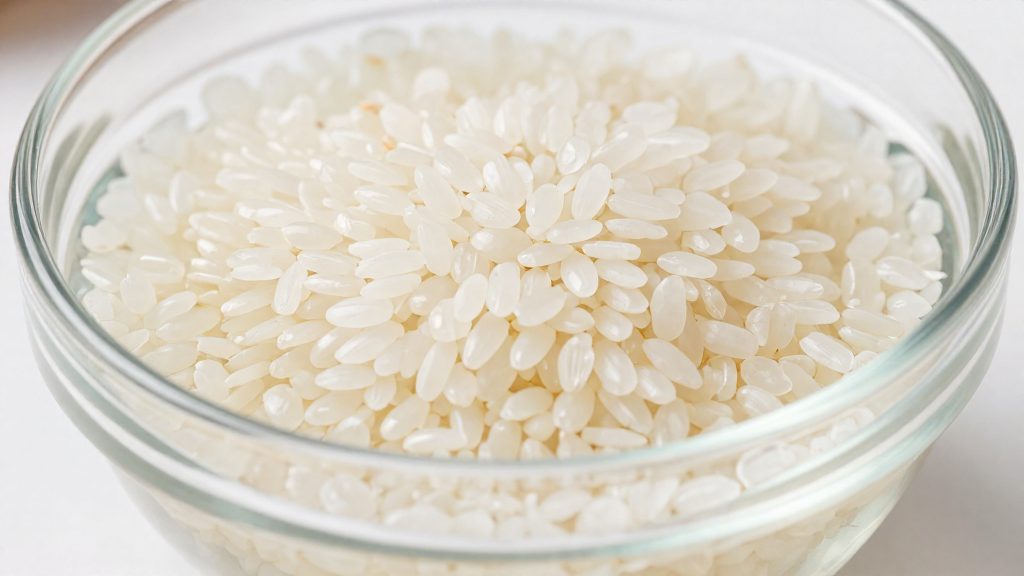
Standard Water-to-Rice Ratio Chart by Variety
Selecting the correct liquid-to-grain ratio is the first step in achieving the desired texture. Different rice varieties absorb moisture at different rates due to their starch content and structural integrity. Using too much water results in mushy grains, while too little leaves them undercooked and hard. The following chart outlines the standard volume ratios for common rice types when using the stovetop absorption method.
| Rice Variety | Liquid-to-Grain Ratio | Texture Profile |
|---|---|---|
| Long-grain white | 2:1 | Fluffy, separate grains |
| Jasmine / Firmer long-grain | 1.5:1 | Less sticky, distinct grains |
| Short-grain / Medium-grain | 1.25:1 to 1.5:1 | Softer, slightly clingy |
| Brown rice (long or short) | 2:1 to 2.25:1 | Chewy, nutty |
For long-grain white rice, the standard guideline is two cups of liquid for every one cup of dry rice. This higher ratio compensates for starch release during cooking, ensuring the grains remain separate and fluffy. If you prefer a firmer bite with less stickiness, such as with Jasmine rice, reduce the liquid to a 1.5:1 ratio. This adjustment limits starch gelatinization, preventing a gummy texture.
Short-grain and medium-grain varieties, often used for sushi or risotto, require less liquid, typically between 1.25 and 1.5 cups per cup of rice. These grains are naturally softer and release more starch, so a lower ratio helps maintain their cohesive yet distinct structure.
Brown rice presents a different challenge because it retains its fibrous outer bran layer. This protective layer slows down water absorption, requiring a higher liquid volume of 2 to 2.25 cups per cup of rice. The bran also necessitates a longer cooking time to become tender. Always measure liquid by volume for consistency, as weight can vary slightly between brands.
How Much Water Is Needed for Different Cooking Methods?
The primary variable affecting water volume is the cooking vessel’s ability to retain steam. On an open stovetop, heat causes continuous evaporation, meaning a portion of the initial liquid escapes as vapor before the grains are fully cooked. This loss necessitates a higher starting volume to ensure enough moisture remains for the absorption process. In contrast, sealed pressure cooking environments, such as electric multi-cookers, trap steam within the vessel. Because the lid prevents vapor from escaping, the evaporation rate is virtually eliminated. Consequently, the liquid-to-grain ratio drops significantly, as the water stays in contact with the rice throughout the entire cycle.
For standard long-grain white rice, the stovetop method typically requires a 2:1 volume ratio. However, when using an electric multi-cooker, the ratio shifts to 1:1 for rinsed white varieties. This adjustment reflects the physical reality that sealed vessels conserve all introduced moisture. If you switch from an open pot to a sealed pressure cooker without reducing the water, the rice will become overly soft and waterlogged. Conversely, using the lower pressure-cooker ratio in an open pot will result in dry, undercooked grains because the necessary steam has escaped.
Method-specific adjustment logic also accounts for surface moisture. Rinsing rice leaves residual water on the grains. While this is often negligible in open stovetop cooking due to evaporation, it becomes a significant factor in sealed vessels where no water is lost. Therefore, when using a tight-fitting lid or a pressure cooker, you must account for this retained moisture by slightly reducing the added liquid to maintain the correct final texture.
How Does Rinsing Rice Change the Water Quantity?
Rinsing rice is not merely a cleaning step; it fundamentally alters the starting moisture content of the grains. When you rinse rice to remove surface starch, the grains absorb a small amount of water that remains trapped between them. This residual moisture means the rice is no longer completely dry when it enters the pot. If you ignore this retained water and add the full standard amount of liquid, you risk creating a soupy or overly soft texture, particularly when using a tight-fitting lid that prevents steam from escaping.
For accurate cooking, you must account for this pre-absorbed water. A general rule of thumb is that thoroughly rinsed rice retains approximately two tablespoons of water per cup of grain. To compensate, you should reduce the amount of added liquid proportionally. For example, if a recipe calls for two cups of water for one cup of dry rice, and you have rinsed the rice, you can subtract the volume of the retained water from the total liquid you add. This adjustment ensures that the final absorption process yields the desired consistency without excess liquid.
The impact of this adjustment is most noticeable in stovetop methods where evaporation is limited by a secure lid. In these scenarios, the balance between added liquid and retained moisture is critical for achieving fluffy, separate grains rather than a gummy mass. By measuring the liquid after rinsing or simply reducing the added water slightly, you maintain control over the final texture. This practice is especially important for varieties prone to stickiness, as the removed starch already contributes to a less cohesive grain structure, and the retained moisture further influences how the remaining liquid is absorbed during the simmer.
Step-by-Step Stovetop Water and Cooking Calculations
To achieve consistent texture, follow a strict sequence of heating, simmering, and resting. The process relies on controlled heat transfer and steam retention rather than constant stirring.
- Initial Boil: Place the measured rice and water in a pot. Bring the liquid to a rolling boil over medium-high heat. This initial high heat ensures the water is fully saturated with heat energy before the absorption phase begins.
- Simmer Phase: Once boiling, immediately reduce the heat to the lowest simmer setting. Secure a tight-fitting lid on the pot. For standard white rice varieties, maintain this gentle simmer for 15 to 18 minutes. The lid is essential here; it traps steam, which contributes to the cooking process and prevents the water from evaporating too quickly, ensuring the grains absorb the liquid evenly.
- Resting Phase: After the simmering time elapses, remove the pot from the heat source. Do not open the lid. Let the rice rest off-heat for a mandatory 10 minutes. This resting period allows the residual heat and trapped steam to complete the hydration of the grain interiors, resulting in a uniform texture.
This method prioritizes heat management over active stirring. By adhering to the specific timing for simmering and resting, you ensure the water is fully absorbed without the grains becoming mushy or remaining undercooked. The final step is to fluff the rice gently with a fork to separate the grains before serving.
Yield and Portion Calculator: Dry Rice to Cooked Volume
Planning meals requires converting dry grain measurements into final cooked quantities. The primary metric for portioning is the expansion factor, which describes how much the volume increases during cooking. For standard long-grain white rice, one dry US measuring cup typically weighs between 185 and 200 grams. When cooked using the standard absorption method, this single cup of dry rice yields approximately three cups of finished grain, weighing around 600 grams. This represents a tripling of volume, a consistent pattern across most white rice varieties when prepared with adequate liquid.
To estimate servings, apply the standard portion size. One adult serving of cooked rice is generally defined as half to three-quarters of a cup. Therefore, one cup of dry rice provides enough cooked grain for three to four people. If you are cooking for a larger group, simply multiply the number of dry cups by three to determine the total cooked volume, then divide by your preferred serving size.
| Dry Rice Input | Approx. Dry Weight | Cooked Volume Yield | Estimated Adult Servings |
|---|---|---|---|
| 1 cup | 185–200 g | 3 cups | 3–4 |
| 2 cups | 370–400 g | 6 cups | 6–8 |
| 4 cups | 740–800 g | 12 cups | 12–16 |
Note that brown rice and other whole-grain varieties may exhibit slightly different expansion ratios due to their fibrous bran layers, but the general principle of significant volume increase remains consistent. Always account for the specific grain type when finalizing your shopping list.
What Causes Rice to Be Mushy or Dry and How to Fix It?
Texture failures in cooked rice almost always stem from water quantity errors or improper handling during the final stages of cooking. Understanding the cause allows you to apply the correct fix for the next batch.
Mushy or Gummy Texture This result typically indicates that too much liquid was used or that the grains were overcooked. When the water-to-rice ratio is higher than necessary for the specific variety, the starches break down excessively, causing the grains to lose their individual structure and become sticky or paste-like. This is common when using a high-ratio method for firmer rice varieties that require less liquid. To prevent this, ensure you are using the correct ratio for your specific grain type. If you have already cooked the rice and it is too soft, you cannot reverse the process, but you can salvage it by spreading the rice on a baking sheet and drying it in a low-temperature oven to restore some texture, though it will not return to its original state.
Dry or Hard Grains Dry rice signals that insufficient water was added or that the cooking time was too short. The grains have not fully absorbed the necessary moisture to become tender. This often happens if the lid is lifted too frequently, allowing steam to escape, or if the heat was too high, causing the water to evaporate before the rice was done. To fix dry rice, add a small amount of water or broth, cover the pot, and return it to a low simmer for a few minutes until the liquid is absorbed and the grains soften.
Steam Release and Fluffing The final step is critical for texture. After the cooking time is complete, the pot must rest off the heat with the lid closed. This allows the residual steam to finish cooking the grains evenly without direct heat. Lifting the lid too early releases this steam, leading to uneven texture. Once the rest period is over, use a fork to fluff the rice gently. This separates the grains and releases trapped steam, preventing clumping and ensuring a light, airy finish.
Frequently asked questions
How much water do I need for one cup of long-grain white rice?
For standard stovetop cooking, use a 2:1 ratio, which means two cups of water for every one cup of dry rice. This specific volume ensures the grains absorb enough moisture to become fluffy without becoming mushy.
Does brown rice require more water than white rice?
Yes, because the fibrous bran layer slows down absorption, brown rice needs a higher liquid volume. You should use between 2 and 2.25 cups of water per cup of rice to ensure it cooks through properly.
How does rinsing rice affect the amount of water I add?
Rinsing leaves behind residual moisture, roughly equivalent to 2 tablespoons of water per cup of grain. To maintain the correct texture, you must slightly reduce the amount of fresh liquid you add to the pot.