How big is a serving of chicken breast?
A serving is a measurement unit in nutrition guidance, not a fixed amount you must eat. In the U.S. MyPlate protein foods group, one ounce-equivalent is one ounce of cooked lean meat, poultry or seafood, as explained in New Mexico State University Extension guidance. Most adults need roughly 5 to 6½ ounce-equivalents of protein foods a day, depending on age, sex and activity level.
That makes a whole breast a large share of a day’s protein, so the portion you serve matters more than how it looks on the plate. Weighing the cooked meat is the most reliable way to get it right.
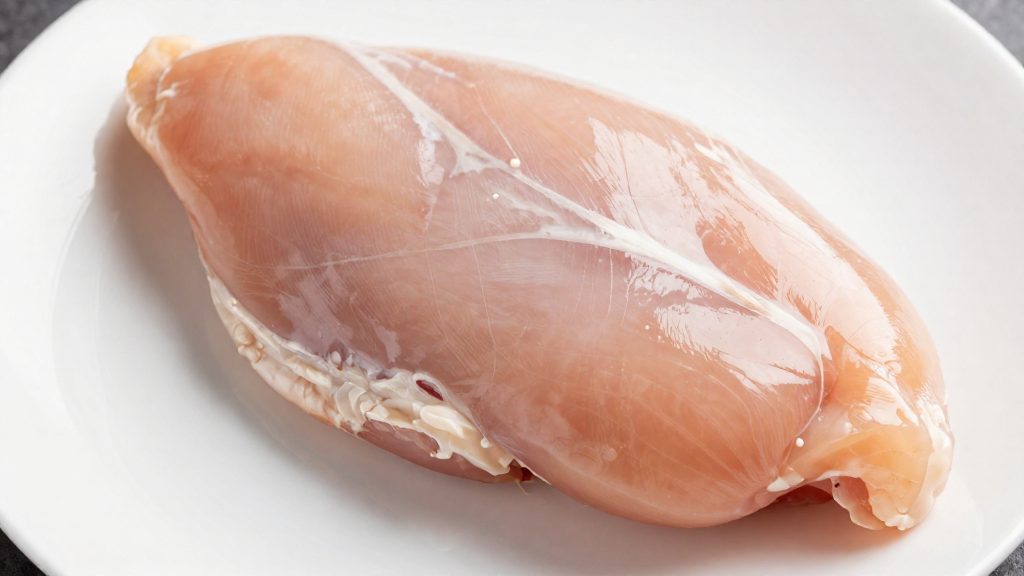
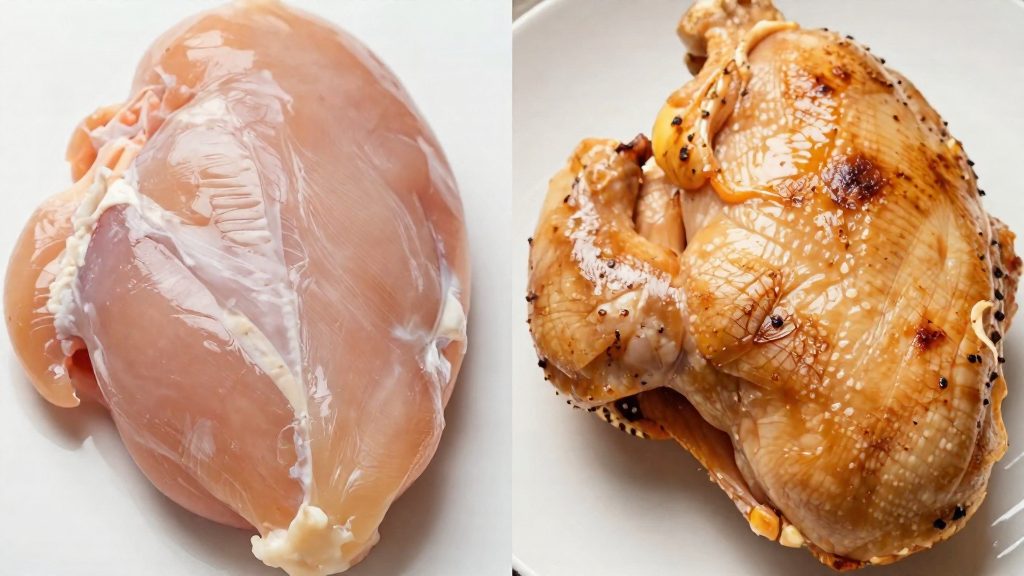
Raw vs cooked chicken weight
Chicken loses water and some fat as it cooks, so the same piece weighs less afterward. The USDA cooking-yield data measure these weight changes, which come from moisture and fat loss during cooking (USDA Agricultural Research Service). The USDA Table of Cooking Yields for Meat and Poultry lists yields by cut and cooking method. Look for the boneless, skinless breast entry there if you want a published reference.
The yield depends on the cooking method, time, heat and thickness of the meat, so one fixed percentage will not fit every pan. The most dependable approach is to measure your own:
- Weigh one raw breast, trimmed of skin and bone.
- Cook it the way you usually do, until it reaches a safe internal temperature.
- Let it rest a few minutes, then weigh it.
- Divide the cooked weight by the raw weight. A result of 0.75 means 75 percent of the raw weight remains.
Write the number down and reuse it for the same cut and cooking method.
A common source of error is mixing the two weights. Packages list raw weight, but portions are usually planned in cooked weight.
How much raw chicken should I buy per person?
Use this rule:
Raw weight per person = cooked portion you want ÷ your measured yield
This gives a starting point. Round up if the breasts are unevenly sized, if you want leftovers, or if you expect bigger appetites. Round down only when you are sure the family will eat less than planned.
Chicken breast portion calculator with worked examples
Follow four steps:
- Choose the cooked weight you want per person.
- Use your measured yield.
- Divide the cooked target by the yield to get the raw weight per person.
- Multiply by the number of people. Divide ounces by 16 to get pounds.
Example 1: four adults. The target is 6 oz cooked each, a generous adult portion. The assumed yield is 0.75. 6 ÷ 0.75 = 8 oz raw each. 8 × 4 = 32 oz, or 2 lb raw.
Example 2: two children. The target is 3 oz cooked each, with the same assumed yield. 3 ÷ 0.75 = 4 oz raw each. 4 × 2 = 8 oz, or half a pound raw.
Example 3: one adult, lower yield. The target is 4 oz cooked and the assumed yield is 0.70. 4 ÷ 0.70 ≈ 5.7 oz raw. Round up to 6 oz.
The yields in these examples are assumed only to show the arithmetic. They are not published values. Replace them with the yield you measured.
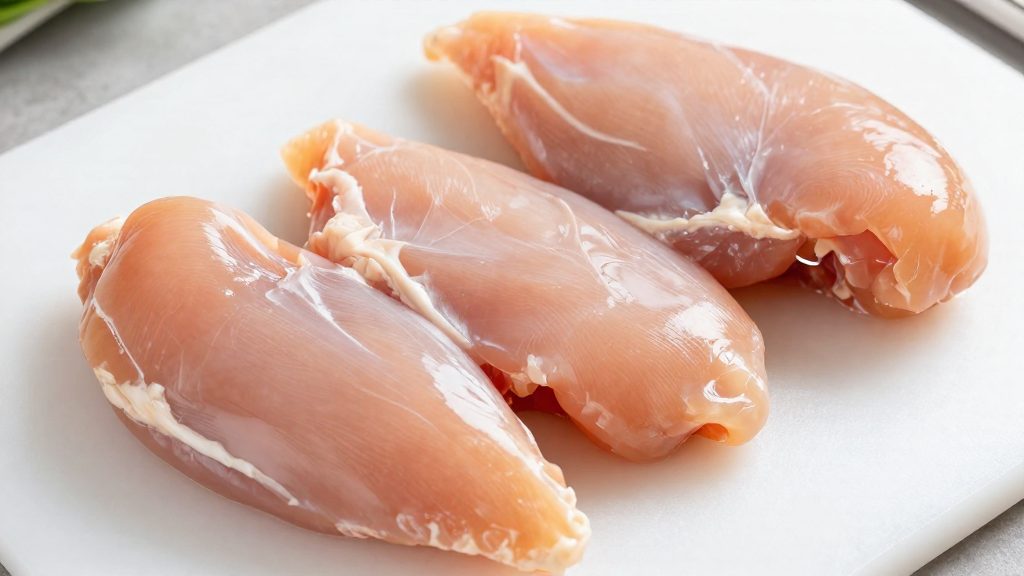
What does 3 ounces of chicken look like?
Ohio State University Extension lists a small chicken breast as roughly 3 ounces (Ohio State University Extension, SS-153). That makes a useful visual reference, but only an approximate one. Breasts vary a lot in size, and one that looks small can weigh more than 3 ounces.
To train your eye, weigh cooked portions with a kitchen scale for the first few meals. Compare the size of each piece with the weight shown. After a while you will be able to estimate portions more accurately, but the scale remains the reference when accuracy matters, for example for a child’s portion or a training diet.
How many servings are in one chicken breast?
Divide the cooked weight of the meat by your target portion:
Number of servings = cooked weight of the meat ÷ portion size
For example, a breast that cooks down to 12 oz, an example figure rather than a typical one, gives four 3-oz portions. Use the cooked weight you measure, not the raw weight from the package, or the count will be wrong. Breasts that are thick at one end and thin at the other can be cut so that the pieces weigh about the same, which makes portioning easier.
Adjusting portions for kids, athletes and meal prep
Children. Portions should follow appetite and age, not an adult target. Use the age-based guidance in USDA’s dietary recommendations rather than adult numbers. If you are concerned about growth or appetite, a pediatric clinician can set a suitable amount.
Athletes. Heavy training raises energy and protein needs. Increase portions gradually, track how you feel and how your weight changes, and ask a registered dietitian for a personal target if you need a precise figure.
Meal prep. Divide cooked chicken into portions once it has cooled, and get it into the refrigerator within 2 hours of cooking. If the room is above 90 °F, the limit is 1 hour (USDA FSIS). Cook chicken to 165 °F, measured with a food thermometer in the thickest part. Reheat leftovers until they reach 165 °F as well.
Label each container with the date it was cooked and the portion size. Keeping the portions consistent makes it easier to check that each one matches your calculation.
Frequently asked questions
How many days can cooked chicken breast stay in the refrigerator?
Storage time depends on how cold your refrigerator runs and how quickly the chicken was cooled. Check the cooked-poultry storage chart in USDA FSIS leftovers guidance and use a fridge thermometer to confirm the temperature.
Does skin or bone change the portion?
Yes. Skin and bone add raw weight that you will not eat. Weigh the trimmed raw breast to get a cleaner yield and a more accurate meat portion.
Can I use the same calculator for frozen chicken breast?
Yes, once the chicken is fully thawed in the refrigerator. Some packaged chicken contains added solution, which adds weight, so check the label and weigh the meat yourself to get your own yield.