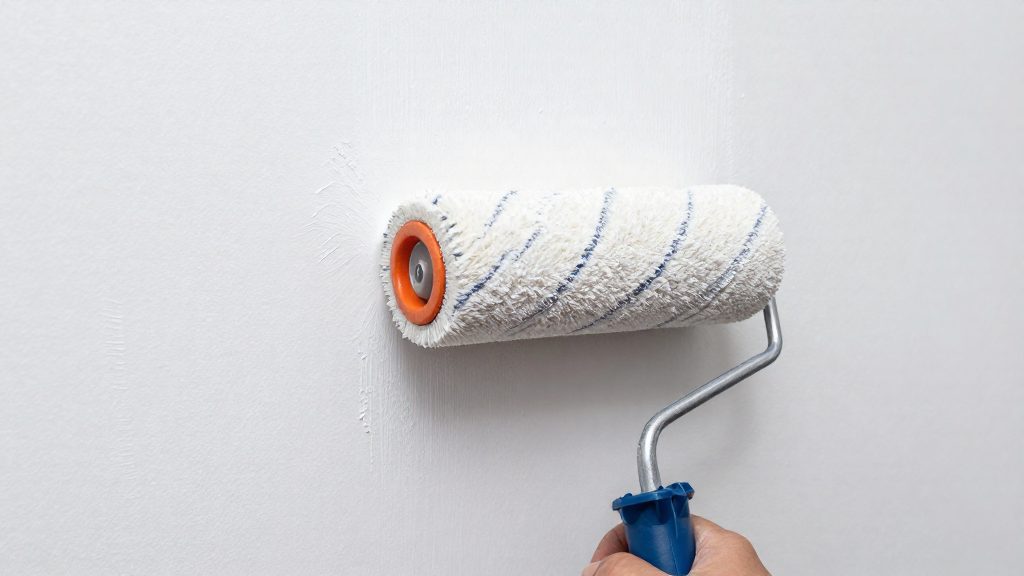
How much paint do you need for two coats?
Two coats use about twice the paint of one coat. The fastest reliable way to work it out is to double the area you will paint, then divide by the coverage per gallon printed on the can:
Gallons needed = (paintable area × 2) ÷ coverage per gallon
Keep your units consistent. If the coverage is given in square feet per gallon, measure the walls in square feet. Do not mix square feet with square metres, because the result will be wrong by a large margin.
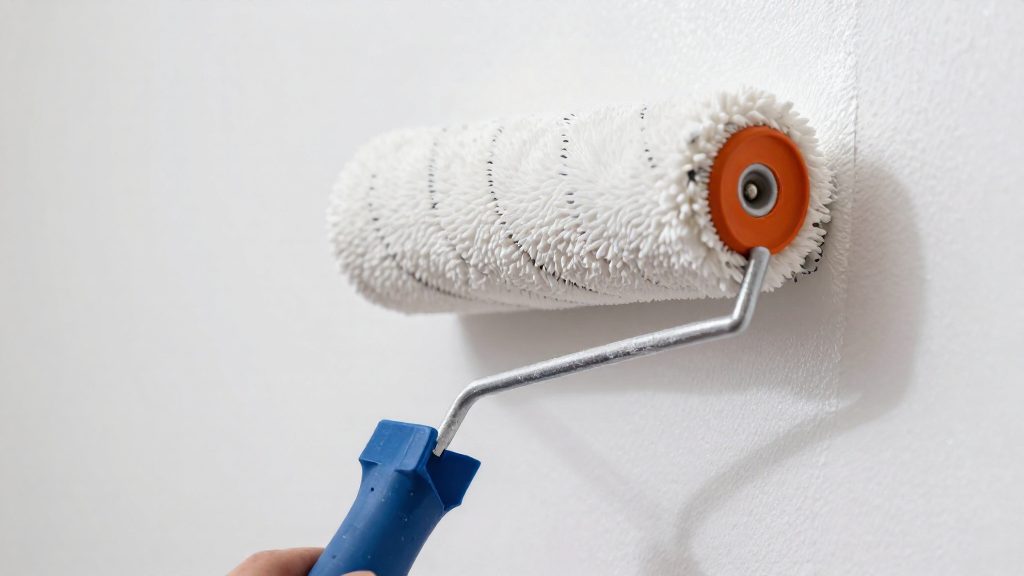
Measure the paintable area
For a rectangular room, start with the perimeter. Add the length and the width, then multiply by two. Multiply the perimeter by the height from floor to ceiling to get the gross wall area in square feet.
Next, subtract the openings that will not receive paint. Measure each door and window, multiply its width by its height, and subtract the total from the gross area. Subtracting the full size of each opening, frame included, slightly overestimates the paint needed. That small surplus is useful.
If the room is irregular, measure each wall separately, multiply its width by its height, and add the results. Skirting boards, small trim and minor gaps are usually ignored at this stage. The margin you add at the end covers them.
Read the coverage on the can
The coverage figure on a can is the area one coat should cover under ideal conditions, usually on a smooth, prepared surface. Consumer guides commonly give about 350 to 400 square feet per gallon for smooth interior walls, per coat. Use that range only to plan roughly. The figure printed on the label, or in the manufacturer’s technical data sheet for that exact product, is the one to use.
Data sheets explain where the figure comes from. Coverage depends on the dry film thickness the product is expected to leave, and a thicker coat covers less area. One European manufacturer’s data sheet for an interior and exterior latex lists a theoretical consumption of 8 to 10 square metres per litre per coat. That is roughly 326 to 407 square feet per US gallon. Look for the words ‘theoretical coverage’ or ‘spreading rate’ and check which film thickness they assume.
Real coverage is usually lower than the printed figure. Porous or textured surfaces, uneven application, and paint lost in trays and on rollers all reduce it.
Worked example: a 12 by 14 room
Take a room measuring 12 feet by 14 feet with 8-foot ceilings. It has one door, 3 feet by 7 feet, and one window, 3 feet by 5 feet.
- Perimeter: 2 × (12 + 14) = 52 feet
- Gross wall area: 52 × 8 = 416 square feet
- Openings: (3 × 7) + (3 × 5) = 36 square feet
- Net wall area: 416 − 36 = 380 square feet
- Two coats: 380 × 2 = 760 square feet of coverage
With a can rated at 350 square feet per gallon, 760 ÷ 350 gives 2.17 gallons, so you would buy 3 gallons. With a can rated at 400 square feet per gallon, 760 ÷ 400 gives 1.9 gallons. Two gallons would just cover the job with no margin for a missed patch or an uneven edge, so a third gallon is the safer purchase. The same room can therefore call for two or three gallons depending on the product, which is why you should read the can before you buy.
What changes the amount
Surface. Smooth, sealed drywall takes paint most efficiently. Textured walls, bare plaster, unsealed masonry and new, absorbent surfaces soak paint up, so plan for less coverage than the printed figure. Check the product’s documentation for guidance on porous or textured substrates.
Sheen. Matte finishes generally spread further than glossy ones. A glossier paint often covers less area per gallon, so the same wall may need more product. Read the can for the specific figure rather than assuming one value for all finishes.
Colour change. Covering a dark colour with a light one, or the reverse, often takes more coats than the standard. If the label says your colour needs more than two coats, multiply by that number instead of 2 in the formula.
Application. Heavy coats cover less area than thin, even coats, and they drip. A thick roller nap or a deeply textured roller also absorbs more paint. Use the tools the manufacturer recommends for the product.
Primer
If you prime before painting, calculate the primer separately. Primer has its own coverage figure, which is often different from the topcoat’s, so do not reuse the topcoat rate. Then calculate the topcoat quantity for two coats using the method above.
Quick checklist before you buy
- Measure each wall’s width and height, and write the figures down.
- Subtract every door and window opening.
- Multiply the net area by the number of coats the label recommends for your job.
- Divide by the coverage printed on the can, or in the data sheet for that exact product.
- Round the result up to whole containers.
Round up and work safely
Round every result up to whole containers. A spare gallon costs less than an extra trip mid-job. Paint from different production batches can show slight colour differences, so buy enough from one batch where possible.
Safety matters as much as quantity. Ventilate the room by opening windows and running fans as the label directs, and keep children and pets out until the paint is dry. Stir the paint thoroughly instead of shaking the can. Use a stable ladder or step stool and do not stand on the top rungs. When you paint around outlets and switches, switch off the power at the breaker or remove the cover plates first.
Frequently asked questions
Does the same method work for ceilings?
Yes. Multiply the ceiling’s length by its width to get its area, then apply the two-coat formula with the coverage on the can. Ceilings are often rougher than walls, so expect less coverage and check the product’s documentation.
How long can leftover paint be kept?
It depends on the product. Check the label or the manufacturer’s documentation for the shelf life. In general, keep the container tightly sealed, protected from freezing, and check the paint before reusing it.
How long should I wait between the two coats?
Follow the recoat time in the manufacturer’s data sheet for that product. Temperature and humidity change it, so do not rely on a general number.