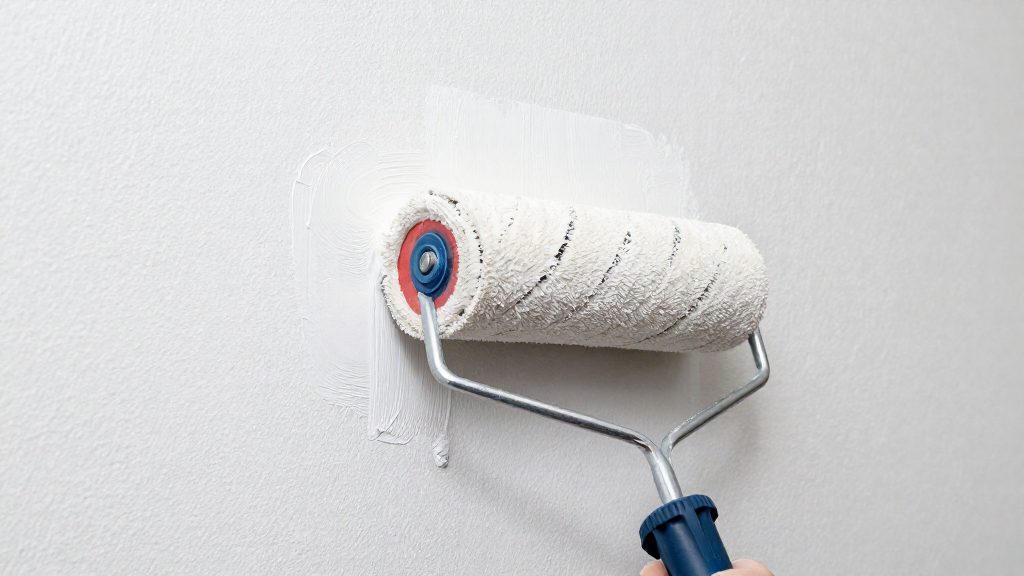
How Wall Texture Impacts Paint Coverage
Wall texture alters paint consumption through surface area expansion and substrate porosity. On smooth, sealed drywall, a gallon of standard interior paint covers 350 to 400 sq ft per coat. Textured surfaces increase physical area, forcing paint to fill valleys and coat peaks. This geometric expansion reduces effective coverage by 10% to 50%, depending on depth.
The correlation between texture depth and coverage reduction is direct. Light textures, such as light orange peel, reduce coverage to 280 to 325 sq ft per gallon per coat (10%–20% loss). Medium textures, including standard knockdown or heavy orange peel, lower coverage to 220 to 280 sq ft per gallon per coat (20%–35% reduction). Heavy textures, such as rough stucco, deep swirl, popcorn, or heavy trowel, result in the lowest coverage at 150 to 220 sq ft per gallon per coat (up to 50% reduction).
Absorption rates also play a significant role on unsealed substrates. Primer applied over bare, unsealed textured drywall or plaster suffers from high porosity. In these cases, coverage drops to 200 to 275 sq ft per gallon as the material soaks up liquid before forming a uniform film.
| Texture Level | Example Profiles | Estimated Coverage (sq ft/gal/coat) | Reduction vs. Smooth |
|---|---|---|---|
| Light | Light orange peel | 280 – 325 | 10% – 20% |
| Medium | Standard knockdown, heavy orange peel | 220 – 280 | 20% – 35% |
| Heavy | Rough stucco, deep swirl, popcorn | 150 – 220 | Up to 50% |
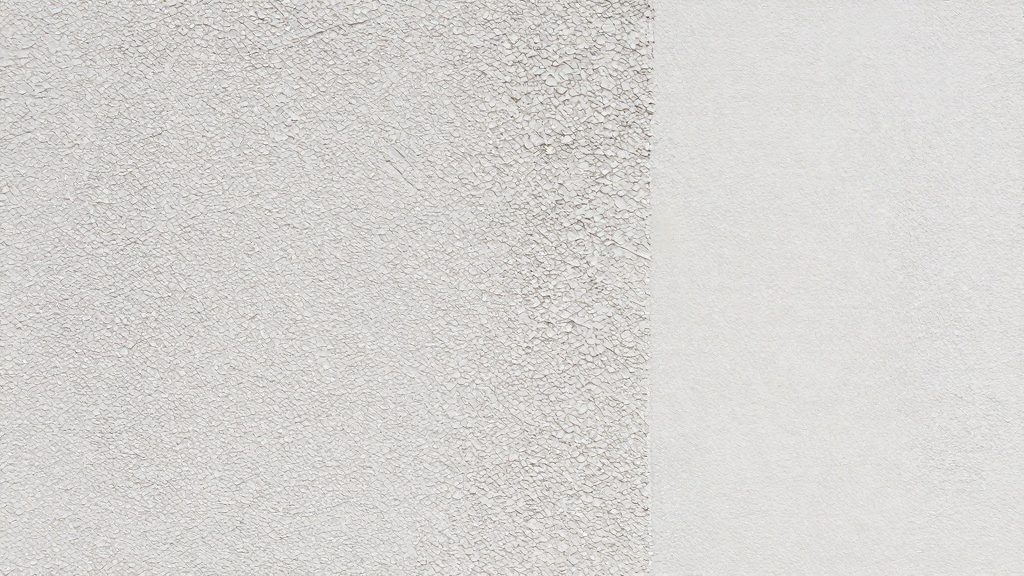
Paint Coverage Rates by Texture Type
Refer to the coverage table in the previous section for specific rates by texture depth. When applying primer to bare, unsealed textured drywall or plaster, expect further reduced coverage of 200 to 275 sq ft per gallon due to high substrate porosity. Regardless of texture type, standard interior painting requires a minimum of two coats to achieve uniform opacity and color depth across peaks and valleys.
Accurate categorization ensures you purchase enough material to complete the job without running short during the second coat. Light textures require a moderate adjustment to baseline calculations, while heavy textures like deep swirl or stucco require the largest quantity per square foot.
How to Calculate Paint for Textured Walls
Determining the correct volume of paint for textured surfaces requires a four-step calculation: measuring net area, applying a texture reduction factor, multiplying by the number of coats, and adding a safety buffer. This method prevents under-purchasing, which is difficult to rectify once paint has dried.
Step 1: Calculate Net Wall Area Measure the total perimeter of the room and multiply by the ceiling height to get gross square footage. Subtract the area of all openings to find the net paintable area. Use standard deduction values:
- Interior doors: Subtract 21 sq ft per door (3 ft × 7 ft).
- Windows: Subtract 12 to 15 sq ft per window (3 ft × 4 ft to 3 ft × 5 ft).
Step 2: Apply the Texture Reduction Factor Smooth drywall coverage does not apply to textured walls. Adjust your net area by dividing it by the estimated coverage rate for your specific texture depth:
| Texture Depth | Example Profiles | Estimated Coverage (sq ft/gal/coat) |
|---|---|---|
| Light | Light orange peel | 280 – 325 |
| Medium | Standard knockdown, heavy orange peel | 220 – 280 |
| Heavy | Rough stucco, deep swirl, popcorn | 150 – 220 |
Note: If applying primer to bare, unsealed textured drywall or plaster, use a reduced coverage rate of 200 to 275 sq ft per gallon due to high substrate porosity.
Step 3: Multiply by the Number of Coats Since a minimum of two coats is recommended for uniform opacity, multiply the result from Step 2 by 2.
Step 4: Add the 10% Buffer Multiply the result from Step 3 by 1.10. This 10% buffer accounts for roller nap absorption, cutting-in edges, spill margins, and future touch-ups.
Worked Calculation Examples
Apply texture-adjusted coverage rates to specific room dimensions to estimate the volume of paint required. The calculation follows a four-step process: determine net wall area, apply the texture-specific coverage rate, multiply by the number of coats, and add the buffer.
Small Room Scenario (Light Texture) Consider a bedroom measuring 10 ft by 12 ft with 8 ft ceilings. The gross wall area is 352 sq ft (perimeter 44 ft × height 8 ft). Subtracting one standard door (21 sq ft) and one window (13.5 sq ft) yields a net area of 317.5 sq ft. For light orange peel texture, use the mid-range coverage of 300 sq ft per gallon per coat. Dividing 317.5 by 300 gives 1.06 gallons per coat. Since a minimum of two coats is recommended, the base requirement is 2.12 gallons. Adding the standard 10% buffer results in a final purchase quantity of approximately 2.33 gallons, which rounds up to 3 gallons.
Large Room Scenario (Heavy Texture) For a living room measuring 20 ft by 24 ft with 9 ft ceilings, the gross area is 792 sq ft. After subtracting two doors (42 sq ft) and two windows (27 sq ft), the net area is 723 sq ft. Heavy stucco texture reduces coverage significantly; using the mid-range rate of 185 sq ft per gallon per coat, one coat requires 3.91 gallons. Two coats total 7.82 gallons. Applying the 10% buffer brings the total to roughly 8.6 gallons, which rounds up to 9 gallons.
Multi-Coat Total Calculation Always calculate the total volume before purchasing. The formula is: (Net Area ÷ Texture Coverage Rate) × Number of Coats × 1.10 (Buffer). This ensures you account for the increased physical surface area created by the texture profile.
Which Roller Nap and Tools to Use
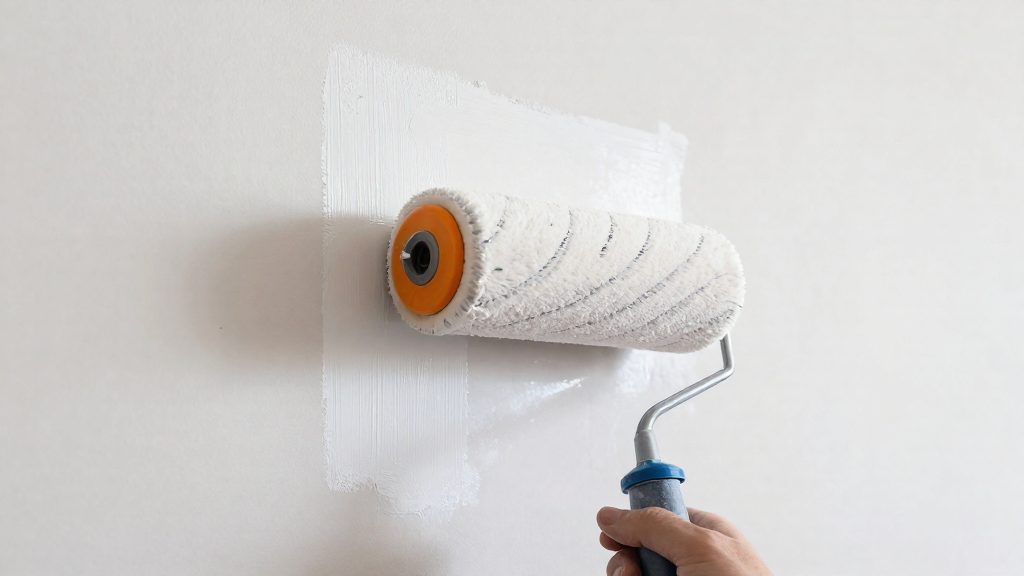
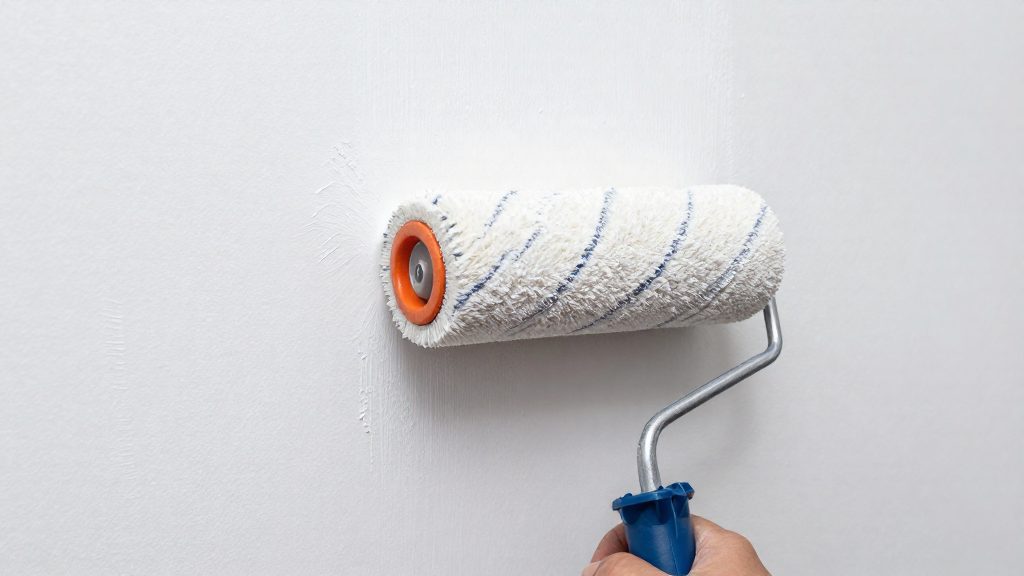
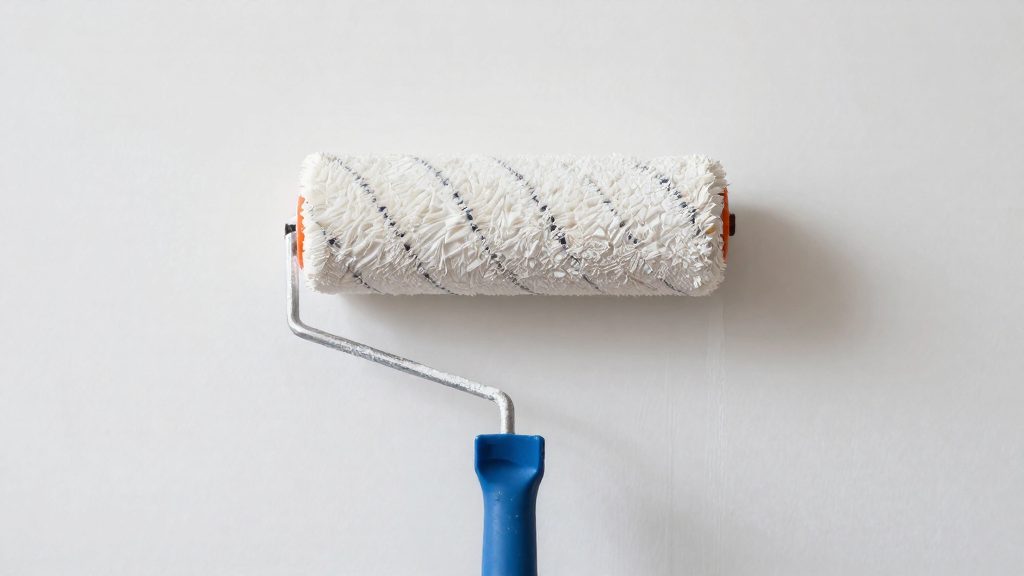
Selecting the correct roller nap thickness is the primary factor in ensuring paint penetrates the valleys of a textured surface. The nap must be deep enough to reach the lowest points of the texture profile without leaving dry spots.
| Texture Depth | Example Profiles | Recommended Roller Nap |
|---|---|---|
| Light | Light orange peel | 1/2-inch to 3/4-inch |
| Medium | Standard knockdown, heavy orange peel | 1/2-inch to 3/4-inch |
| Heavy | Deep swirl, popcorn, rough stucco | 3/4-inch to 1-inch |
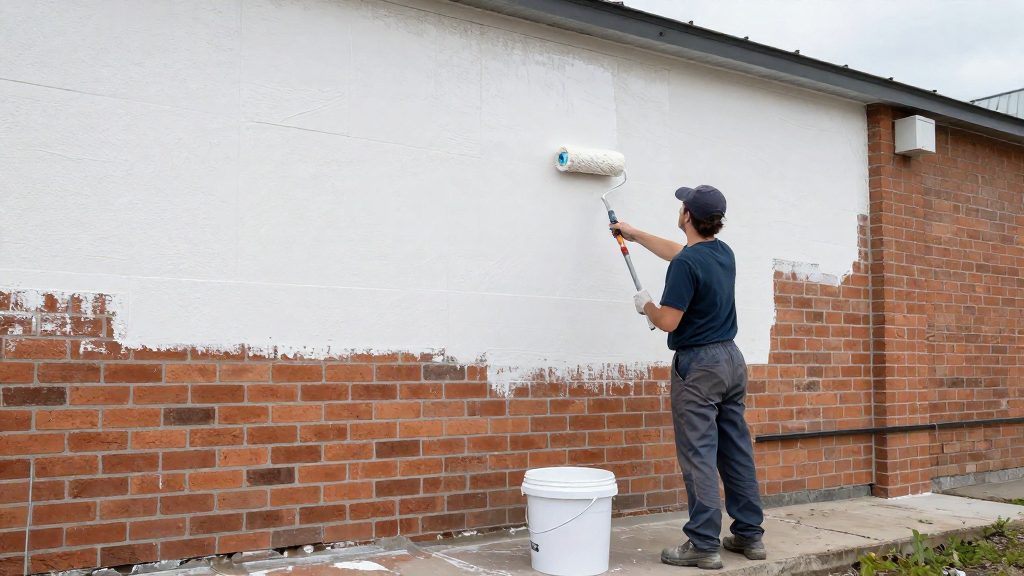
For primer application on bare, unsealed textured drywall or plaster, use the same nap thickness recommended for the topcoat. The high porosity of these substrates absorbs liquid rapidly; a thicker nap ensures the primer reaches deep crevices to seal the surface. Using a thin nap on heavy texture often results in an uneven seal, leading to blotchy topcoats later.
While rollers are standard for large wall areas, a brush remains necessary for cutting in edges, corners, and trim. When transitioning from brush to roller on textured walls, overlap the brush work slightly into the roller path to prevent visible lines. For very heavy textures like stucco, ensure the roller is fully saturated before starting, as brushes may struggle to load enough paint to bridge gaps.
Drying Times and Ideal Application Conditions
Applying paint to textured walls requires strict adherence to environmental parameters to ensure proper film formation and adhesion. The ideal temperature range for standard water-based interior latex or acrylic paints is 50°F to 85°F (10°C to 29°C). Deviating from this range can compromise the chemical curing process, leading to poor adhesion or extended drying periods.
Ambient humidity limits are equally significant. Maintain relative humidity between 40% and 70% during application. High humidity slows evaporation, potentially causing the paint to remain tacky for longer than expected, while low humidity may cause the paint to dry too quickly, resulting in poor flow and visible roller marks on textured peaks.
The recoat interval determines when the second coat can be applied. Under standard indoor conditions (70°F and 50% relative humidity), the standard recoat window for water-based interior paint is 2 to 4 hours. Deep textures may need longer to dry due to increased surface area and trapped moisture. Always verify that the first coat is completely dry to the touch before applying the second. If the surface feels cool or damp, extend the wait time.
| Condition Parameter | Recommended Range | Impact on Textured Surfaces |
|---|---|---|
| Temperature | 50°F – 85°F (10°C – 29°C) | Ensures consistent curing across peaks and valleys |
| Relative Humidity | 40% – 70% | Prevents excessive drying time or rapid skinning |
| Recoat Interval | 2 – 4 hours | Standard recoat window at 70°F and 50% RH |
Frequently asked questions
How much extra paint should I buy for textured walls?
Apply a 10% buffer to your calculated total to account for roller nap absorption, cutting-in, and potential touch-ups. This ensures you have sufficient volume to cover the increased surface area expansion caused by the texture profile.
Does primer coverage differ on textured surfaces?
Yes, primer coverage drops to 200 to 275 sq ft per gallon on bare, unsealed textured drywall or plaster. This reduction occurs because the high substrate porosity absorbs liquid before a uniform film can form.
How many coats are required for textured walls?
A minimum of 2 coats is necessary to achieve uniform opacity and color depth across peaks and valleys. Applying only one coat often leaves visible texture shadows, requiring additional passes to ensure consistent coverage.