One gallon of paint, which is 3.78 L in Canadian measurements, is generally rated to cover up to 400 sq ft (about 37 m²) of smooth surface for one coat. Two gallons are enough for an average room with a second coat, according to an online calculator from a national home-improvement retailer (2026). These are approximate guideline figures, not guarantees. Real coverage depends on the surface, the paint’s solids content and how you apply it, so check the manufacturer’s technical data sheet before you buy. This guide shows how to turn a room into a paintable area, how many coats and how much primer to plan for, and how to handle older paint safely.
How do you convert square feet to square metres and litres?
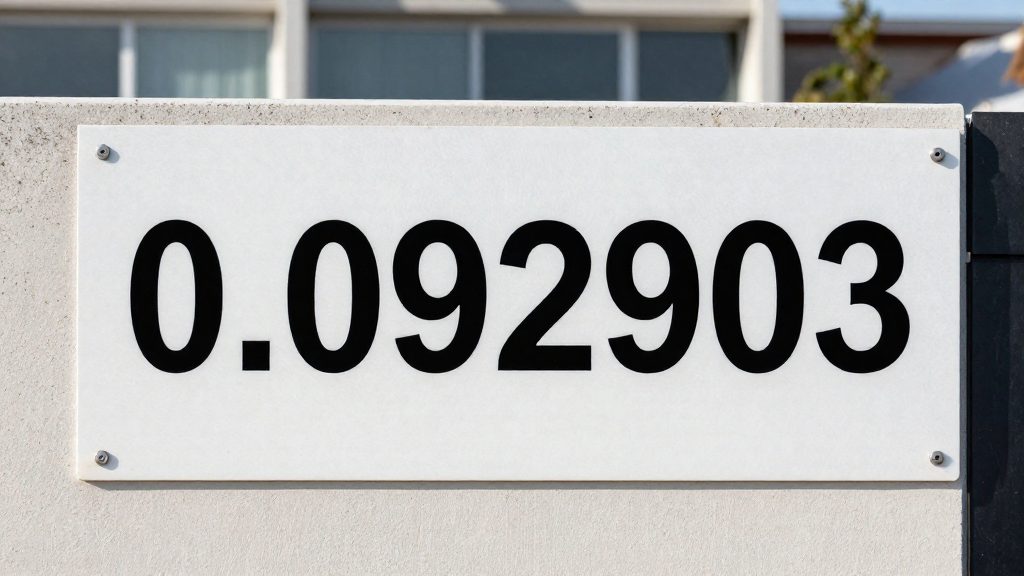
One square foot equals 0.0929 m², so 400 sq ft is about 37.2 m². Paint is sold by volume, so it helps to know the coverage per litre. Divide 400 sq ft by 3.78 L and you get about 106 sq ft per litre, or roughly 9.8 m² per litre. If your measurements are in metres, divide the paintable area in m² by 9.8 to estimate the litres needed for one coat.
How do you measure the paintable area of a room?
Start with the walls. Add the length of every wall to get the perimeter, then multiply by the height from floor to ceiling. For a rectangular room, the formula is 2 × (length + width) × height. Measure each wall separately if the room has alcoves, bay windows or a sloped section, because a single average can hide small areas that add up.
The ceiling is a separate surface and is measured as length × width. Keep one unit throughout, either feet or metres, and do not mix them in the same calculation. Ceilings are often painted with a different product, so calculate that area on its own and check the label of the paint you plan to use.
How do you subtract doors and windows?
Online calculators include a step for openings that will not be painted. For each door, window or similar opening, multiply height by width and subtract the result from the wall total. A 3 m² doorway on a 90 m² wall leaves 87 m² to paint, as one Canadian paint calculator illustrates.
If you plan to paint the door itself, do not subtract it. Measure it as a separate surface instead: count both faces, the edges and the frame, and add that total to your wall area. Skylights are subtracted from the ceiling area in the same way.
How many coats should you plan for?
The calculators assume that most rooms will get a second coat. The two-gallon figure for an average room is based on that assumption. Plan on one coat only if the surface is already well prepared and the new colour is close to the old one.
Several conditions call for more paint. Changing from a dark colour to a light one usually needs more coats, and rough or uneven walls absorb more paint than smooth ones. The official sources consulted do not give a universal number of coats, so use the manufacturer’s documentation for the product you choose, including its recommended number of coats and the interval between them.
A simple way to plan is to multiply the paintable area by the number of coats, then divide by the coverage per gallon. Round the result up to whole cans. This is the method most calculators use, and it leaves a small margin for waste and uneven surfaces.
Does primer change the quantity you need?
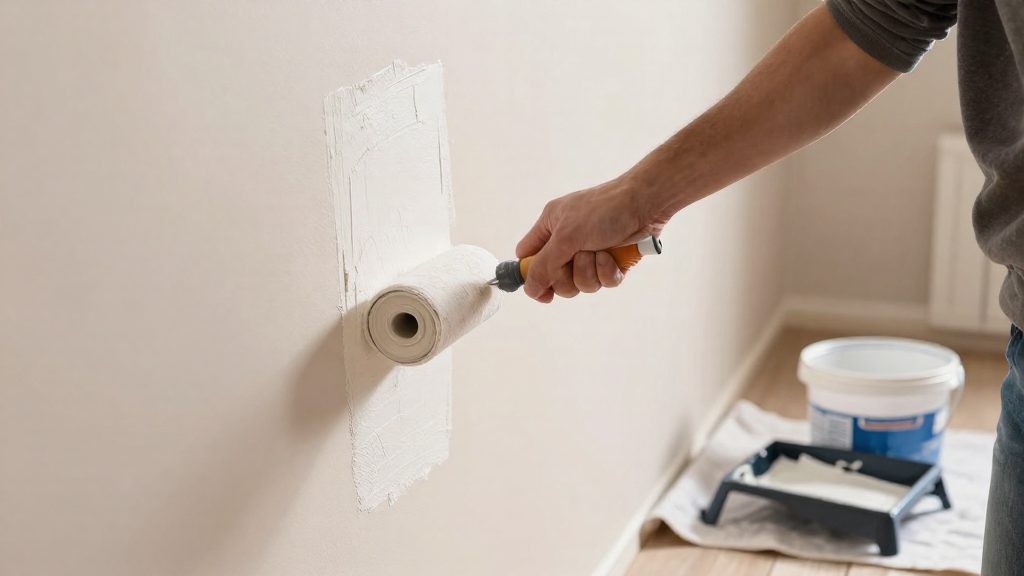
Primer is calculated separately. A Canadian paint calculator assumes that one gallon of primer covers about 250 sq ft (about 23 m²), which is less than paint. Two coats of primer are generally recommended, especially when you go from a dark colour to a bright one. Some tinted primers can work with only one coat, so read the label before you buy.
For the example below, a single primer coat over 383 sq ft needs about 1.5 gallons, which rounds up to two gallons. If you apply two coats of primer, the quantity increases accordingly.
Why does coverage vary from one paint to another?
Coverage depends on how much solid material the paint leaves on the surface. A gallon of paint with 100 percent solids applied at 1 mil (0.001 inch) of dry film would cover about 1,604 sq ft, because a gallon is 231 cubic inches. In practice, paints contain solvents and water that evaporate, and the dry film is often much thinner than the wet film. The general formula is therefore: coverage in sq ft per gallon = 1,604 × volume solids (as a decimal) ÷ dry film thickness in mils. For example, a paint with 65 percent solids applied at 5 mils of dry film covers about 208 sq ft per gallon, which is illustrative and not a figure for any specific product.
This explains why two products with the same printed coverage can deliver different results. A printed spreading rate is tied to a particular film thickness, so a thinner application covers more area but protects less. Porous, textured or previously unpainted surfaces absorb more paint, and overspray and waste reduce the actual amount that reaches the wall.
Worked example: a 12 x 14 ft bedroom
Suppose a bedroom measures 12 ft by 14 ft with an 8 ft ceiling. It has one door (3 ft by 7 ft) and one window (3 ft by 4 ft) that will not be painted.
- Perimeter: 2 × (12 + 14) = 52 ft
- Gross wall area: 52 × 8 = 416 sq ft
- Openings to subtract: door 21 sq ft plus window 12 sq ft = 33 sq ft
- Paintable wall area: 416 − 33 = 383 sq ft (about 35.6 m²)
- One coat: 383 ÷ 400 = 0.96 gallon, which rounds up to one whole gallon
- Two coats: 766 sq ft ÷ 400 = 1.92 gallons, which rounds up to two gallons
- Primer, one coat: 383 ÷ 250 = 1.53 gallons, which rounds up to two gallons
The ceiling is 12 × 14 = 168 sq ft. For one coat it needs about 0.42 gallon, and for two coats about 0.84 gallon. If the ceiling uses the same product as the walls, buy the total and round up. If it uses a separate ceiling paint, calculate it separately. Two gallons of wall paint, plus a separate ceiling product if needed, is a sensible plan for this room.
When should you check for lead before you start painting?
Before you sand, scrape or strip paint in an older home, check its age. Health Canada says that a home built before 1960 probably contains lead-based paint. Homes built between 1960 and 1990 may have lead paint on the exterior. Lead becomes a serious hazard when paint is chipping or flaking, or when children can reach it, and disturbing old paint during renovation can release dust that is dangerous to infants and children.
If the paint may contain lead, follow these precautions:
- Do not use sanders, heat guns or blowlamps to remove the paint, because they create toxic dust and fumes. Use a brush-applied chemical paint stripper instead.
- Keep children, infants and pregnant people away from the work area until cleaning is complete.
- Send paint chip samples to a laboratory for analysis, or hire a contractor with the proper testing equipment.
- Consider hiring an expert for removal, especially on large surfaces or when the paint is deteriorating.
Health Canada notes that there is no known safe level of lead exposure, so testing before major work is a sensible step for any older home. Intact paint on a wall that you are only repainting carries less risk than removing old layers, but the condition of the paint should decide the approach.
Frequently asked questions
Is a gallon in Canada the same as an imperial gallon?
Paint is usually labelled in litres as well as gallons. The figures in this guide use the 3.78 L gallon, which is the volume printed on most cans. An imperial gallon is a larger unit, so always check the litre volume on the label before doing your calculation.
How long should I wait between two coats?
The waiting time depends on the product, the temperature and the humidity. Check the manufacturer’s technical data sheet or the label for the recommended recoat interval, and do not rely on a general rule.
Does the 400 sq ft figure apply to exterior walls?
The figure is a guideline for smooth interior surfaces. Exterior siding, masonry and other rough surfaces usually absorb more paint, so use the manufacturer’s coverage figure for the exterior product you choose.
How should I store leftover paint?
Keep the lid tightly sealed, store the can upright in a place that does not freeze or overheat, and follow the storage instructions on the label. Keep the paint away from children and pets.