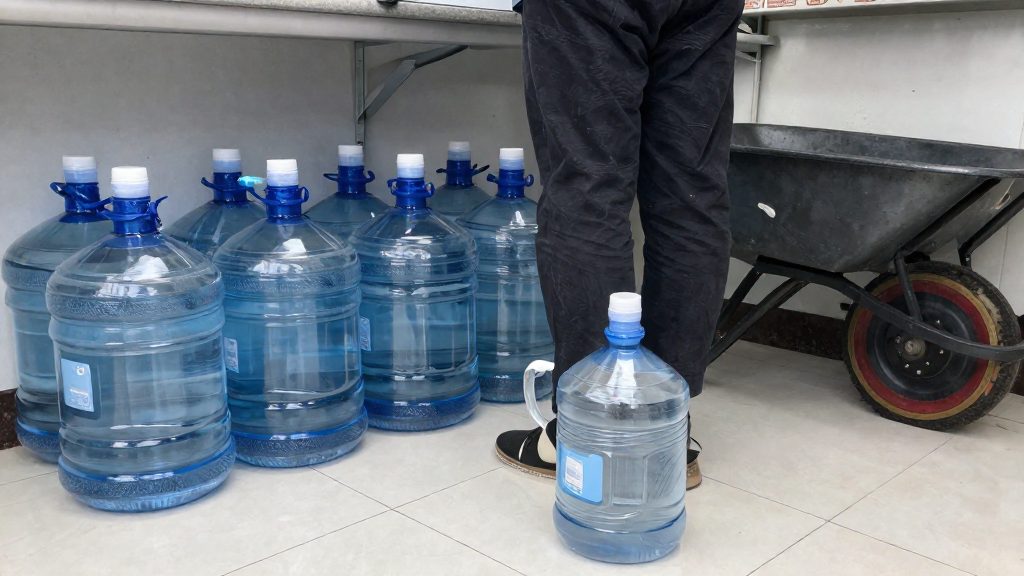
Plan for about four litres of water per person per day, enough for at least 72 hours. According to Public Safety Canada’s emergency kit guidance, that comes to 12 litres per person over three days. Health Canada (2026) splits the daily amount into two litres for drinking and two litres for cooking and cleaning, so a household of four needs 48 litres for three days. This guide explains how to calculate your own total, how to adjust it for pets and people with particular needs, and how to store and treat the water safely.
How much water does each person need per day?
The amount depends on what the water is for. Public Safety Canada’s emergency kit guidance gives about four litres per person per day. Health Canada and the City of Montreal (2025) break that total down the same way:
- Drinking: 2 litres per person per day.
- Cooking, cleaning and hygiene: 2 more litres per person per day. Health Canada presents this as an optional extra. The City of Montreal lists it as water to prepare food and for personal hygiene, such as brushing teeth.
The two-litre drinking figure is the minimum to plan for first. A Public Safety Canada quiz for Emergency Preparedness Week 2026 gives the same figure for drinking water. If storage space is limited, keep the drinking portion on hand and decide in advance where the cooking and hygiene water will come from.
Why plan for 72 hours?
Public Safety Canada advises households to be prepared to look after themselves for at least 72 hours. That is a minimum, not a maximum. At four litres per person per day, the 72-hour target means 12 litres per person. The official sources consulted do not set a longer period. If local authorities announce a longer interruption, follow their instructions and recalculate with the number of days they give you.
The same 72-hour period applies to the whole emergency kit, so the water total should be calculated alongside the other supplies rather than on its own. Working from the number of days first makes it easier to see how much space the water will take.
How do you calculate the total for your household?
Use this formula:
people × litres per person per day × number of days = total litres
Then add the water for pets and for any special needs, as described below. Work through the steps in this order:
- Count everyone who lives in the home and who is likely to stay there during an emergency.
- Choose the number of days, starting from three (72 hours).
- Multiply by four if the water covers drinking, cooking and hygiene, or by two if you store drinking water only.
- Add the amounts for pets and for any special needs.
Worked example: a household of four for 72 hours
4 people × 4 litres × 3 days = 48 litres
The split is 4 × 2 × 3 = 24 litres for drinking and 4 × 2 × 3 = 24 litres for cooking and hygiene. In 1.5-litre bottles, 48 litres is 32 bottles. Round up a little if you want a margin, but keep the calculation visible so you can see when your stock falls short.
Worked example: a household of two for five days
If local authorities advise a five-day supply, the same formula gives 2 × 4 × 5 = 40 litres. This second example only shows the arithmetic. It is not an official recommendation for five days.
How do pets and special needs change the total?
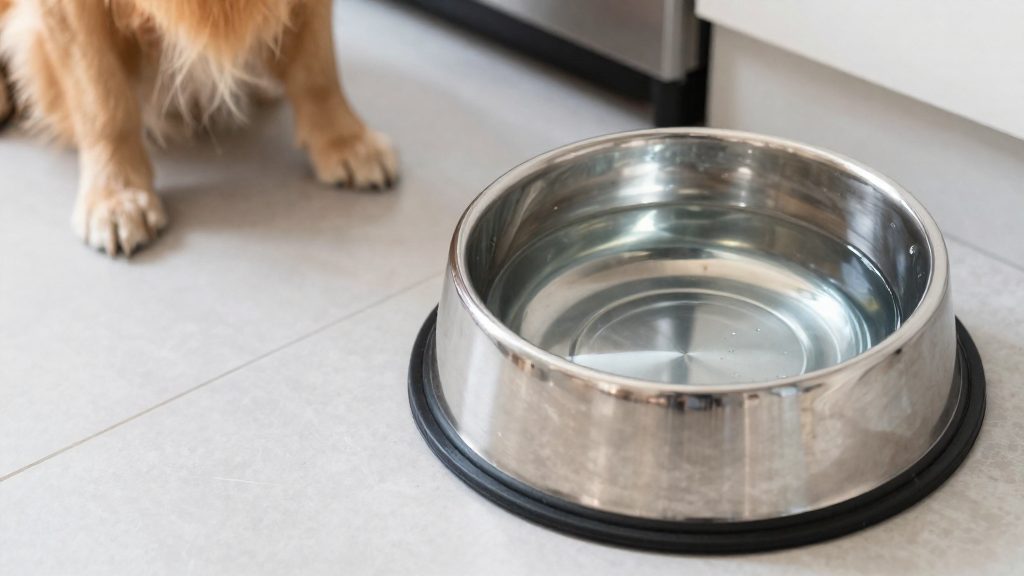
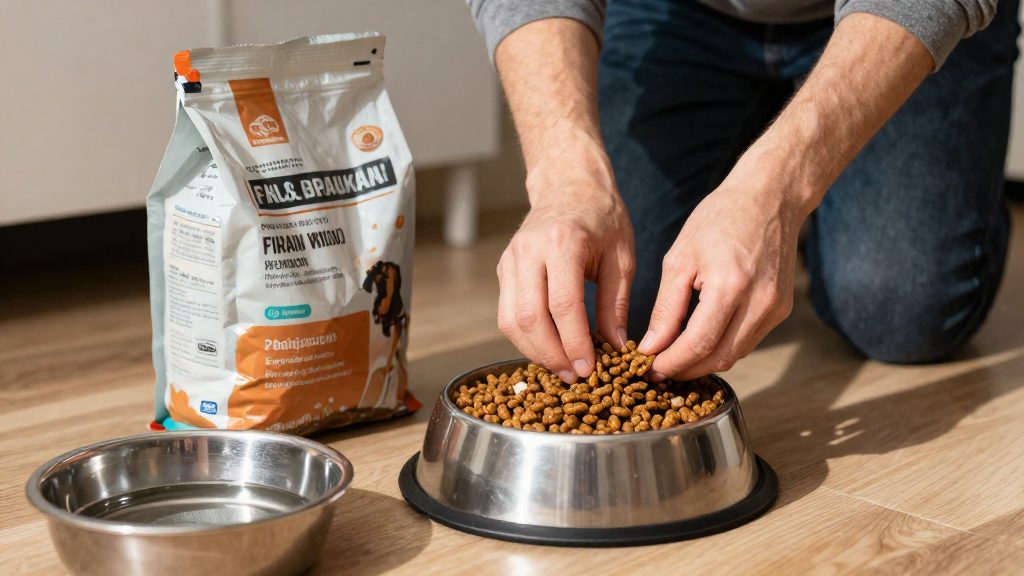
The official sources consulted do not give a water quantity for pets. Public Safety Canada’s emergency kit guidance mentions pet food but not pet water. Ask your veterinarian how much water your animals drink each day, then multiply that amount by the number of days you plan for and add it to the household total.
The same principle applies to people with particular needs. A household that includes infants, people who are pregnant, people who are ill, or people who take medication with water may need more water or a different type of water than the general figure. The official sources consulted do not specify those amounts. Ask a health care professional or your local public health unit to set the figure, then add it to your total. If water is needed to prepare infant formula, follow the formula manufacturer’s instructions for the amount and the water to use.
When should you replace stored water?
Public Safety Canada lists water among emergency kit items that might expire, and recommends replacing them at least once a year. Set a yearly reminder for the whole kit, and check the date printed on any sealed commercial water. For water you bottle or fill yourself, the official sources consulted do not give a replacement interval. In that case, follow the container manufacturer’s documentation and replace the water on a fixed schedule you can remember.
How do you store water safely?
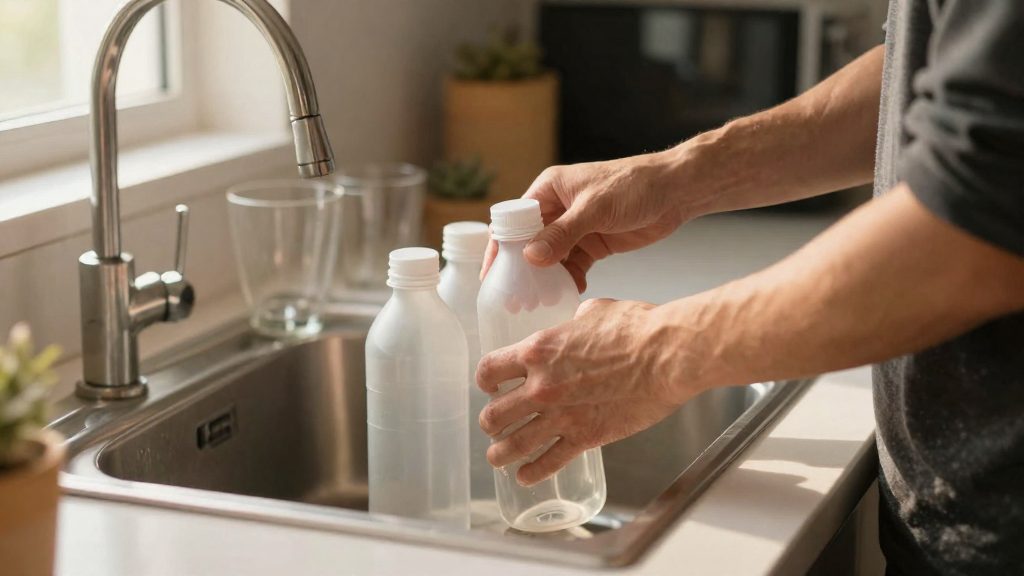
Choose containers that are easy to carry and handle. Health Canada notes that smaller bottles are easier to handle, and the emergency kit guidance recommends small bottles that can be carried easily. Keep the supply in one place that you can reach quickly, such as a front-hall closet, so that it is easy to grab if you need to leave the home.
The official sources consulted do not describe how to clean containers, how to seal them, or the storage conditions that suit them. Follow the container manufacturer’s instructions for those steps. Keep stored water away from chemicals, fuel and cleaning products, and never reuse a container that held a chemical or any other non-drinking product.
How do you make stored water safe to drink?
Health Canada (2026) says to boil water used for drinking, food preparation, dental hygiene, ice, washing produce and making beverages. Boil the water before using it for any of these purposes.
If boiling is not practical, the same guidance describes disinfecting the water with unscented household bleach at a strength of 5.25%. Add about 2 drops per litre, stir, and let the water stand for 30 minutes. Use a clean medicine dropper to measure the bleach. Check the concentration on the label before you dose, because this dosage applies only to 5.25% bleach. Never mix bleach with other cleaning products.
Frequently asked questions
Is storing 72 hours of water a legal requirement in Canada?
No. The Government of Canada presents the 72-hour period as guidance for emergency preparedness, not as a legal obligation. The official sources consulted do not cite a regulation that sets a water quantity for households.
Can I store water in a bathtub or freeze it in its container?
The official sources consulted do not address either method. Use only containers designed for drinking water, and follow the container manufacturer’s instructions on filling, sealing and freezing, since a container that is full of frozen water can crack or leak.
What if my bleach is not 5.25%?
The official sources consulted give the dose only for 5.25% household bleach, so do not adjust it by guesswork. Check the label first. If you cannot confirm the concentration, boil the water, which is the first method in the official guidance.